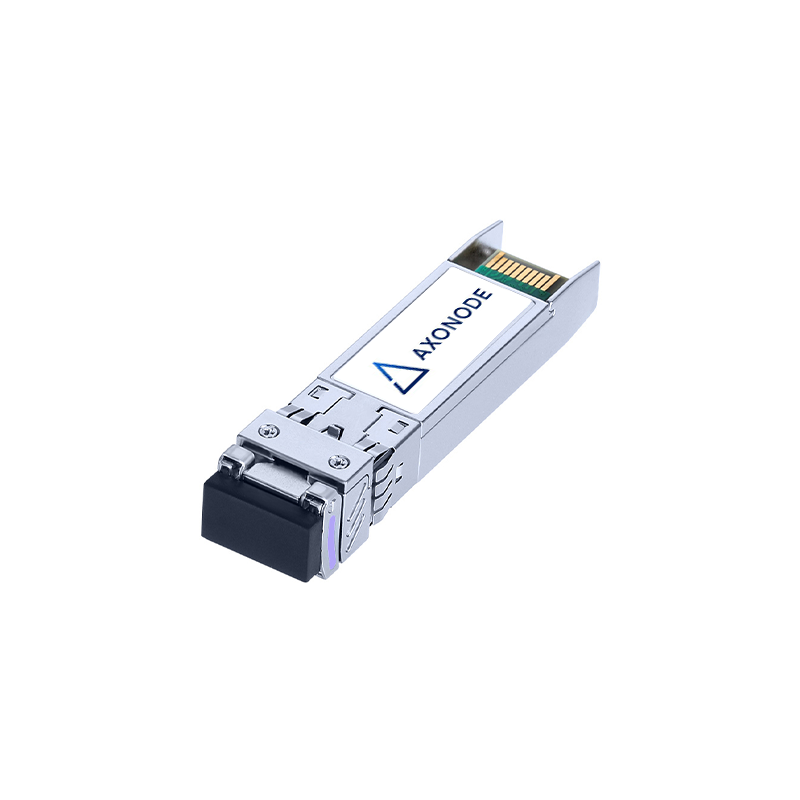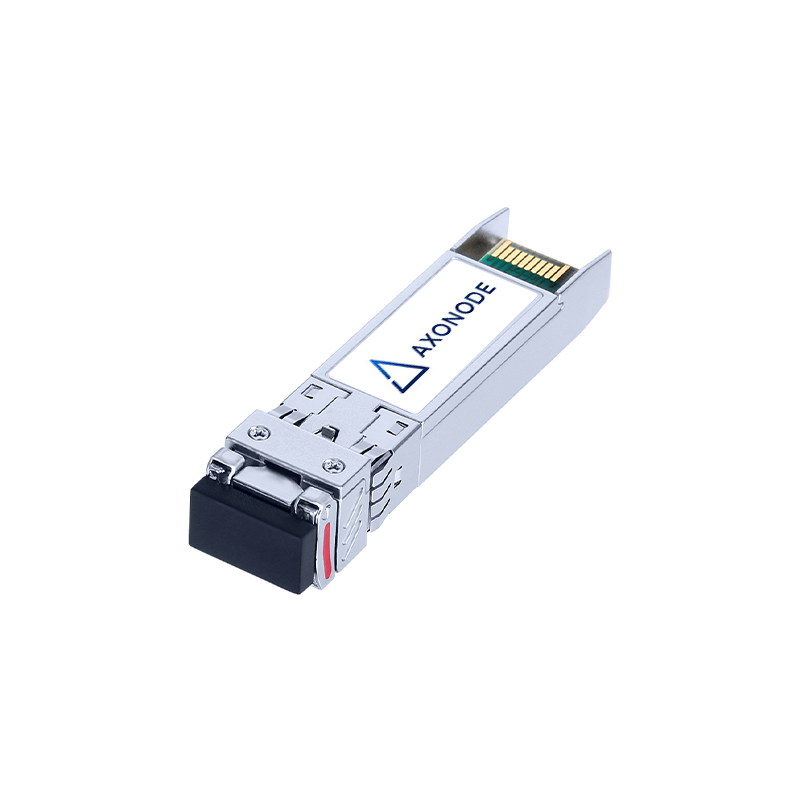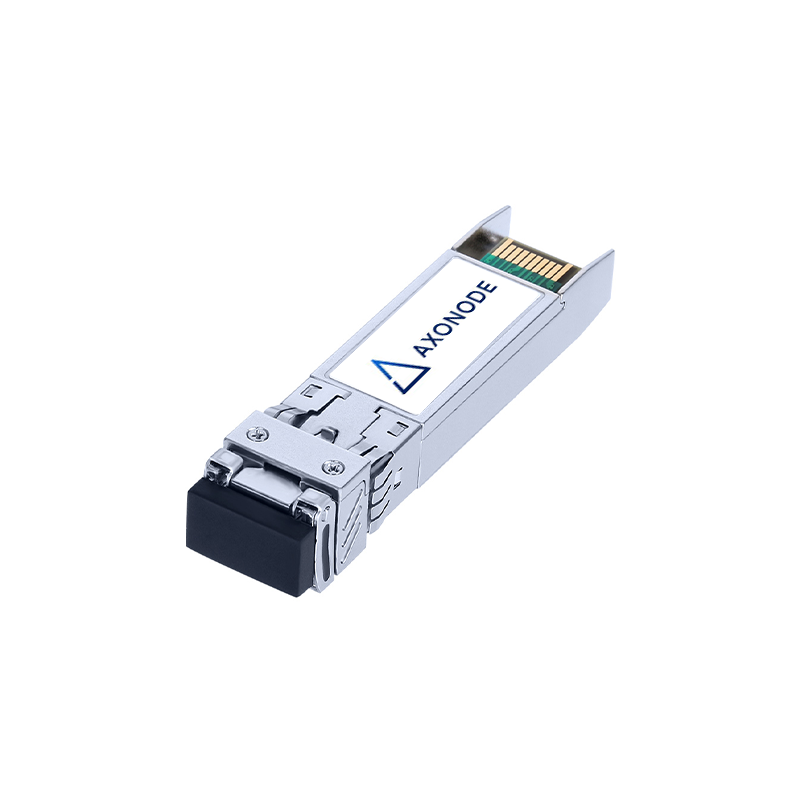
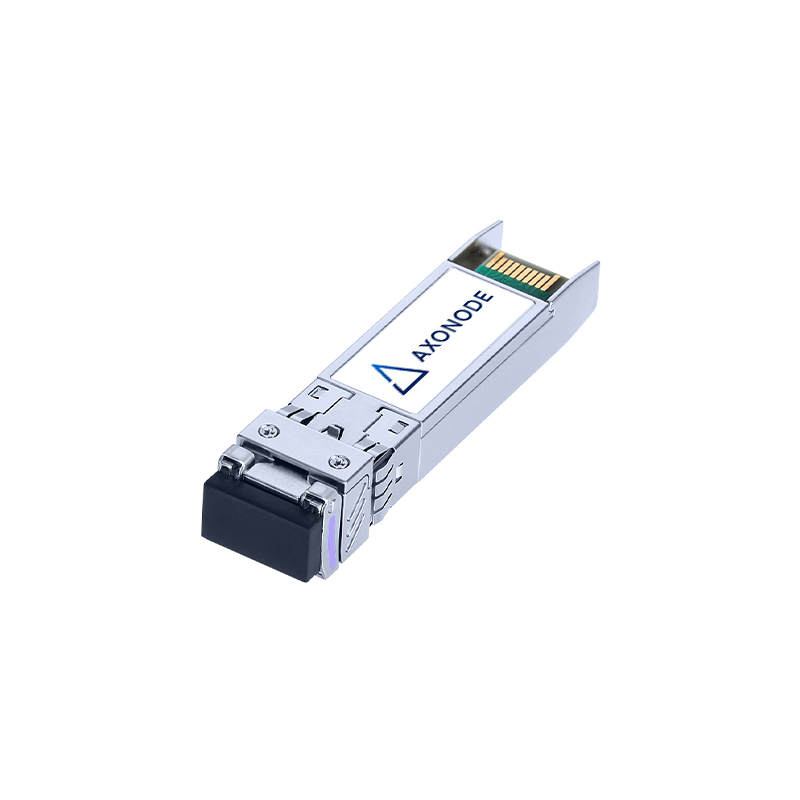
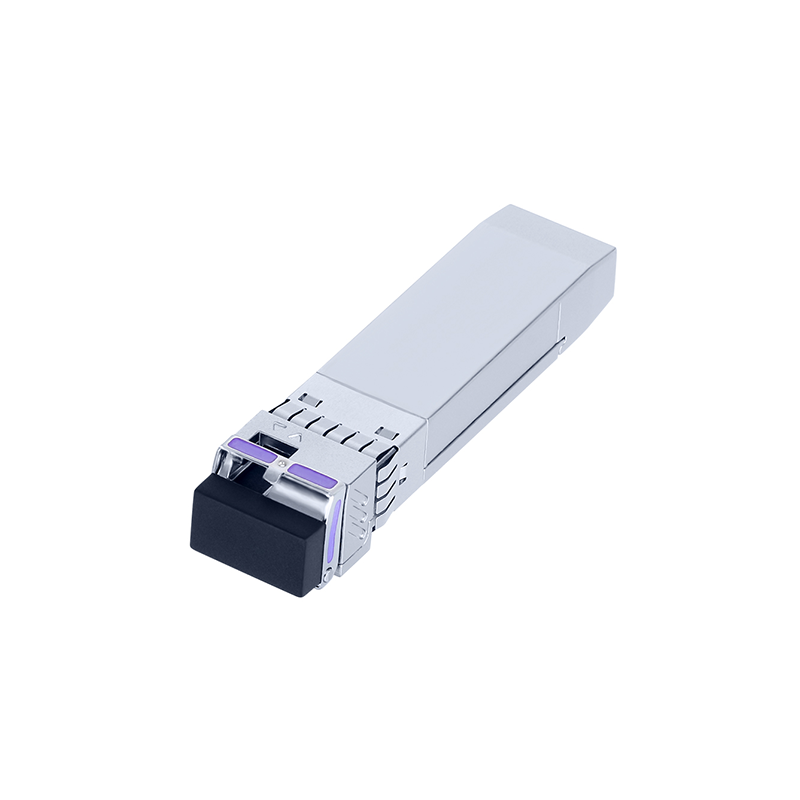
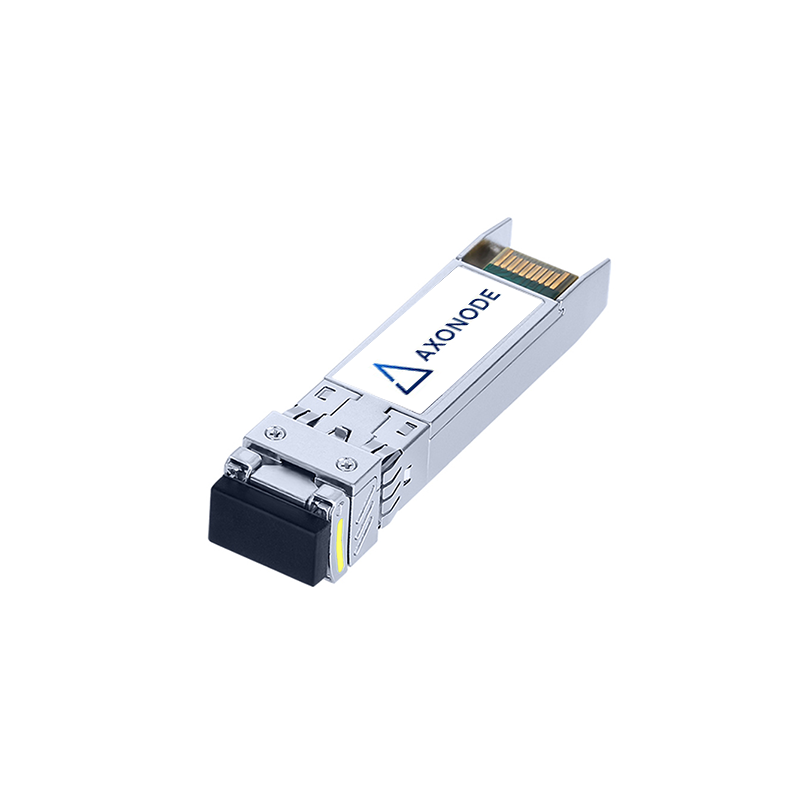
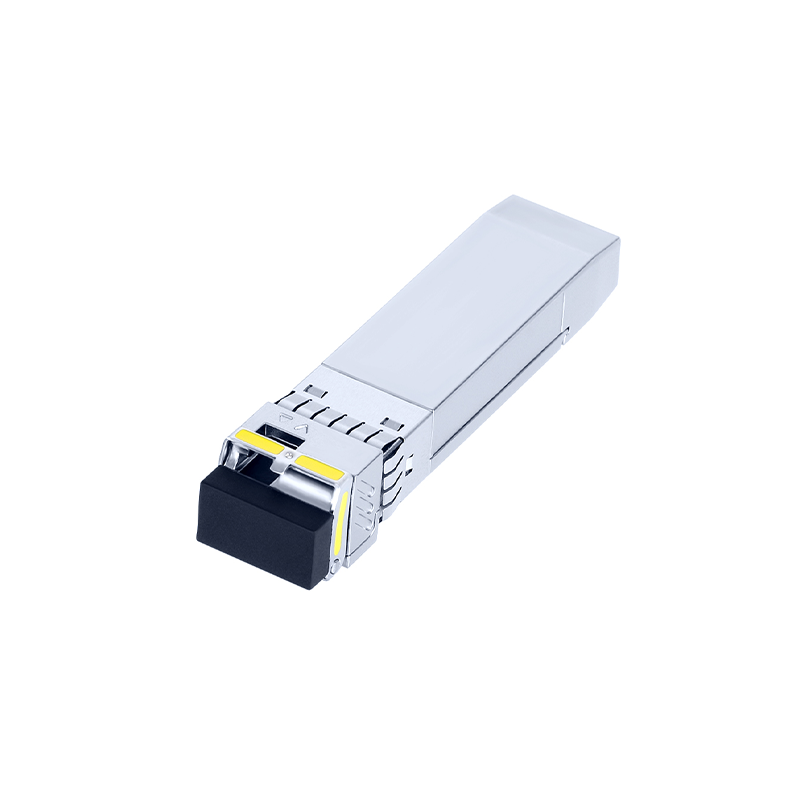
10G BiDi SFP+ 80km Optical Transceiver
Matched 10G BiDi SFP+ transceiver pair for long-reach 10G links over one single-mode fiber strand up to 80km. Includes complementary 1490nm / 1550nm and 1550nm / 1490nm wavelength directions, Simplex LC connectivity and DDM/DOM monitoring support.
Specifications
- Warranty
- 3-Years
- Customization
- Free OEM labeling
- Delivery Time
- 48 hours dispatch
1. Confirm the long-reach single-fiber link conditions first.
The Axonode 10G BiDi SFP+ 80km solution uses two complementary SFP+ modules at opposite ends of one single-mode fiber strand. Confirm the fiber route, connector type, patching arrangement, measured route loss and engineering margin before deployment.
10G SFP+ Port
Confirm that the host device supports a standard 10G SFP+ port and the required compatibility coding.
Simplex LC / Single Fiber
Use single-mode fiber with a Simplex LC connection and one fiber strand.
Reach Up to 80km
Verify total route loss, connector and splice losses, received power and engineering margin before deployment.
2. Matched modules and optical specifications
The two modules must be deployed as a complementary pair. One side transmits at 1490nm and receives at 1550nm; the remote side transmits at 1550nm and receives at 1490nm. Two same-direction modules will not establish a normal BiDi link.
| Product Type | 10G BiDi SFP+ Optical Transceiver Pair |
| Axonode Pair Part Number | A-10G-BIDI-80KM |
| Module A Part Number | A-10G-BIDI-80-1490 — TX 1490nm / RX 1550nm |
| Module B Part Number | A-10G-BIDI-80-1550 — TX 1550nm / RX 1490nm |
| Data Rate | 10.3Gbps nominal; supports 1.0 to 10.7Gbps; 10GBASE-ZR at 10.3125Gbps |
| Form Factor | SFP+ |
| Maximum Reach | Up to 80km over single-mode fiber |
| Fiber | Single-mode fiber, single strand |
| Connector | Simplex LC / single LC receptacle |
| 1490nm-side Module | TX 1490nm (1480-1500nm), RX 1550nm (1540-1560nm) |
| 1550nm-side Module | TX 1550nm (1530-1560nm), RX 1490nm (1480-1500nm) |
| Transmitter / Receiver | Cooled EML laser / APD photodiode |
| Average Output Power | -1 to +4 dBm |
| Receiver Sensitivity | -23 dBm |
| Receiver Overload | -6 dBm |
| Optical Budget | 22 dB, calculated from minimum TX power and receiver sensitivity |
| Extinction Ratio | 7.5 dB |
| SMSR | 30 dB |
| Power Supply | 3.3V; 3.135-3.465V; maximum current 600mA |
| DDM / DOM | Supported |
| Compliance | SFP+ MSA, SFF-8472, RoHS |
| Operating Temperature | Industrial -40 to +85°C |
3. Use one fiber strand for long-reach bidirectional transmission
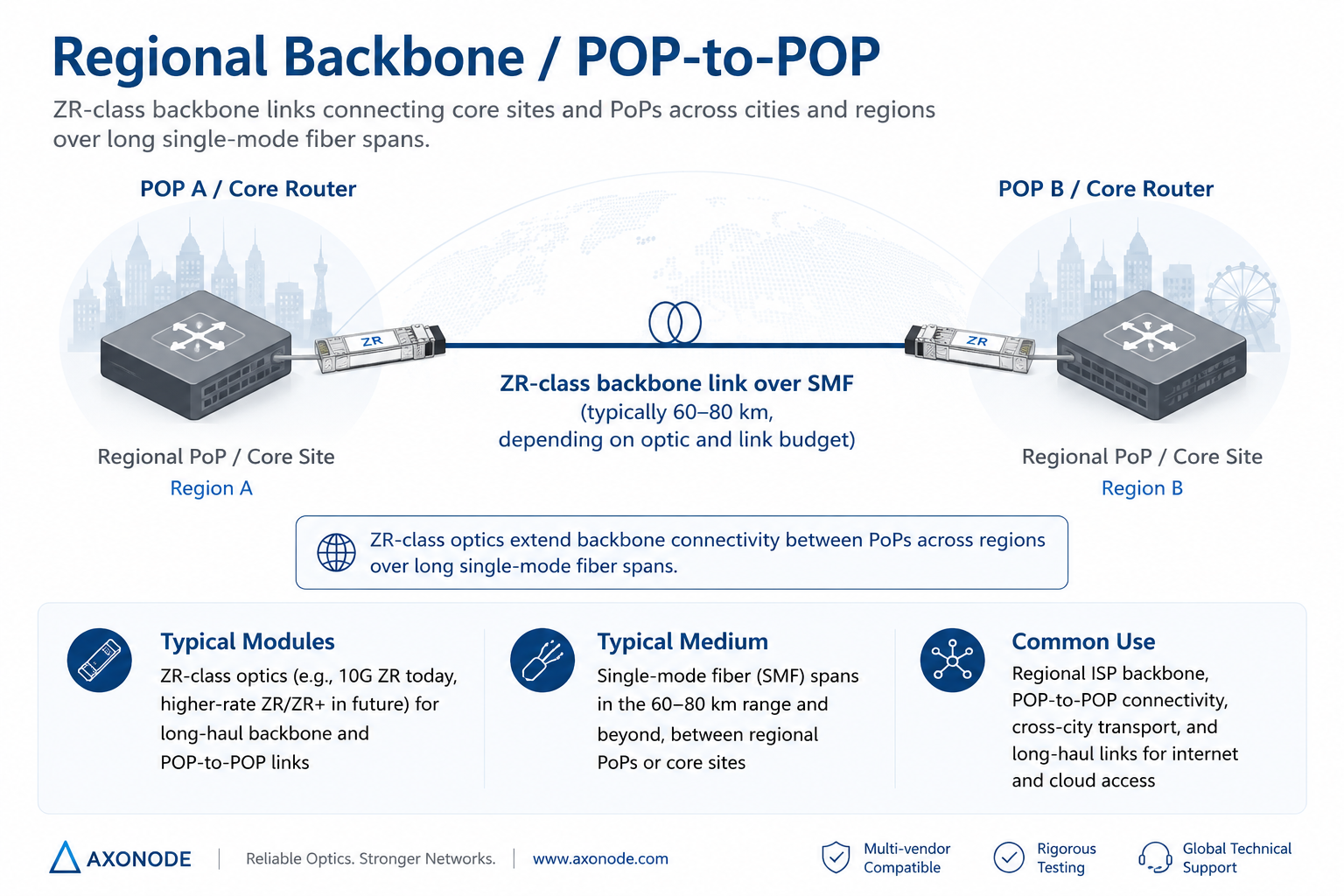
Complementary 1490nm and 1550nm wavelengths allow transmit and receive traffic to share one single-mode fiber strand. This 80km BiDi option is suited to regional ISP backhaul, POP-to-POP connections, metro aggregation and other fiber-constrained long-reach links where the optical loss budget is verified before deployment.
4. Compatibility prepared for your network
Compatibility coding must be confirmed for the actual switch, router or transport platform. Confirm the equipment brand, exact model, software environment, port requirements, industrial temperature need and required complementary module direction before shipment.
5. Quality and compliance
The transceivers are designed to meet SFP+ MSA and SFF-8472 requirements, support digital diagnostic monitoring and use a single LC receptacle for BiDi operation.

6. Comprehensive testing
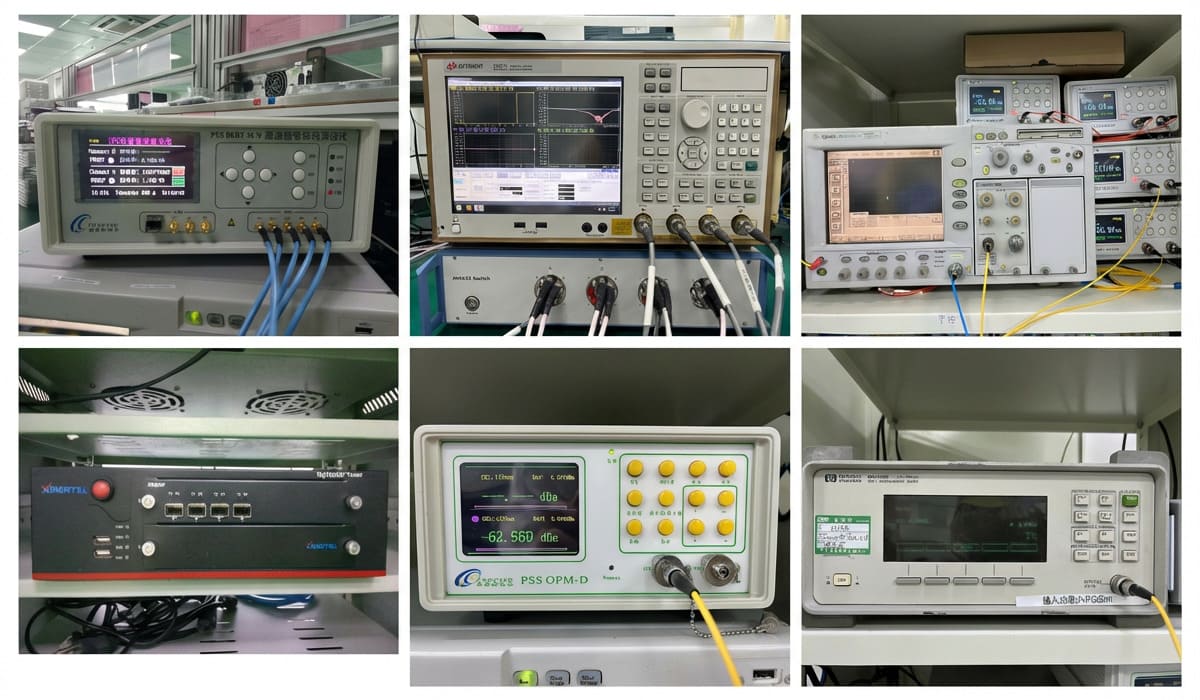
Testing can include output power, receiver sensitivity, wavelength verification, DDM / DOM readings, link connectivity, compatibility coding and temperature checks when required for the project.
Frequently Asked Questions
i. Can this 80km BiDi SFP+ connect to a standard duplex 10G LR or ZR optic?
No. This product is a single-fiber BiDi solution with a Simplex LC interface and complementary 1490nm / 1550nm wavelength directions. Standard duplex optics normally use two fibers and are not the correct optical peer. Use the matched 1490nm TX / 1550nm RX and 1550nm TX / 1490nm RX module directions.
ii. How should the 1490nm and 1550nm modules be paired?
Install the 1490nm TX / 1550nm RX module at one end and the 1550nm TX / 1490nm RX module at the opposite end. The transmit wavelength at one end must match the receive wavelength at the other end. Two modules with the same transmit direction will not establish a normal BiDi link.
iii. What optical budget should be checked for an 80km single-fiber link?
Use the verified 22 dB optical budget as an engineering reference, then calculate or measure the actual route loss. Include fiber attenuation, connector loss, splice loss, patching loss and a practical margin. Reach up to 80km depends on the real link condition, not distance alone.
iv. Can an 80km BiDi module be used on a short fiber link?
Yes, but the received optical power must stay within the permitted receiver range. This 80km version has -1 to +4 dBm TX power, -23 dBm receiver sensitivity and -6 dBm receiver overload. On short or very low-loss links, check DDM / DOM received power and use suitable attenuation if needed.
v. Can 80km BiDi modules from different brands interoperate?
Possible, but it should not be assumed. Wavelength direction, data rate, optical power range, receiver sensitivity, overload limit and host acceptance must all match. For mixed-brand deployment or one-side replacement, confirm both the optical interface and the required compatibility coding before ordering.
vi. What device information is required before compatibility coding?
Provide the equipment brand, exact switch or router model, port type, software or firmware environment, monitoring expectations, industrial temperature requirement and required module direction. A standard SFP+ port is required, but form factor alone does not guarantee host acceptance.
vii. What should be checked if an 80km BiDi link does not come up?
Confirm the two modules are installed in opposite wavelength directions and the link uses one single-mode fiber strand with Simplex LC patching. Then check host coding, port speed, fiber continuity, connector cleanliness, total loss and DDM / DOM readings for TX power and received power.
Confirm your 80km BiDi link
Share your equipment model, fiber route loss and required complementary module directions. Axonode will help confirm compatibility and optical link requirements before shipment.
Request Compatibility Review