40G BiDi vs SR4: Reuse Duplex LC or Deploy MPO?
Compare 40G BiDi and SR4 optics by fiber plant, connector, breakout needs, host support, reach, loss budget and migration risk before ordering.
MEDIA DECISION GUIDE
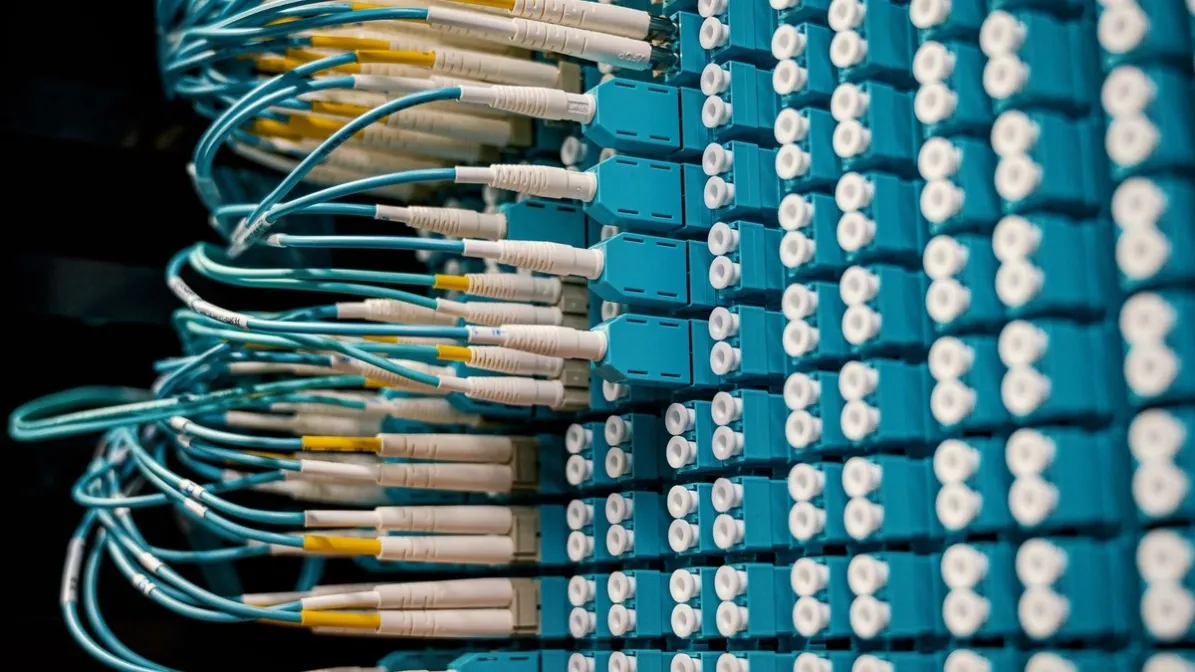
The practical difference is the fiber interface. A 40G SR4 link normally uses four parallel transmit and four parallel receive lanes over multimode fiber through an MPO connector. A 40G BiDi link combines bidirectional wavelengths so that a duplex LC multimode path can carry 40G without converting that path to parallel MPO cabling.
That makes 40G BiDi attractive when an installed duplex LC plant must be reused. It does not make BiDi the automatic choice. The exact host platform, module type, fiber grade, installed loss, reach, breakout requirement and migration plan still decide whether the link is defensible.
Which One Wins by Scenario
The first question is not “Which optic is cheaper?” It is “Which physical path already exists between the two ports?” Record the connector, fiber type, number of strands, route length, patch panels and any cassettes before comparing modules.
| Existing condition | First decision to investigate |
|---|---|
| Duplex LC multimode path already installed | Check whether a supported 40G BiDi pair can reuse it |
| MPO parallel-fiber plant already installed | Check SR4 polarity, pinning and lane continuity |
| New build with planned 10G breakout | SR4 may align better with the breakout design |
| Unknown or mixed cabling | Audit both ends and every passive transition before choosing |
A connector adapter does not transform one optical architecture into the other. An LC-to-MPO assembly may be part of a designed cabling system, but it cannot make a duplex two-fiber link behave like an eight-fiber SR4 path.
How the Two Interfaces Use Fiber
40G BiDi
A 40G BiDi module uses two multimode fibers with bidirectional wavelength transmission. The module handles the wavelength multiplexing internally and presents a duplex LC interface. Its main deployment value is often cable-plant reuse rather than that it is universally superior to SR4.
40G SR4
40GBASE-SR4 is a parallel optical interface. Four electrical lanes are mapped to four optical transmit lanes and four optical receive lanes. That physical lane structure is why the interface commonly uses an MPO connection and why selected SR4 implementations can support 4×10G breakout when the host and optic are designed for it.
The reach of either option must be taken from the exact module data and the installed fiber grade. Do not approve a route from ‘SR4’, ‘BiDi’, or a nominal reach label alone.
The Decision Matrix
| Factor | 40G BiDi direction | 40G SR4 direction |
|---|---|---|
| Installed connector | Strong fit when duplex LC is already verified | Strong fit when a correct MPO plant exists |
| Fiber consumption | Uses a duplex fiber pair | Uses parallel transmit and receive fibers |
| Breakout objective | Usually not the default 4×10G breakout path | Can support breakout only where the exact host and optic allow it |
| Migration work | May reduce recabling on suitable LC multimode routes | May require MPO trunks, cassettes and polarity control |
| Interoperability | Confirm exact BiDi implementation at both ends | Confirm PMD, lane mapping and module specifications |
| Loss validation | Check the complete LC path and module limits | Check MPO connections, cassettes, lane continuity and module limits |
Treat this as a design filter, not a universal verdict. One building may favor BiDi because its duplex LC backbone is difficult to replace. Another may favor SR4 because its parallel-fiber plant and breakout roadmap are already established.
Four Checks That Commonly Change the Choice
- Breakout requirements. If the 40G port must fan out to four independent 10G endpoints, verify the switch documentation, port mode, optic and cabling together. Do not assume a BiDi module provides the same lane-level breakout behavior as SR4.
- Host support. The port may accept the form factor but still impose restrictions on supported module identifiers, software versions or interface modes. Record the device model, line card, operating system and original OEM reference. The MikroTik and Cisco SFP behavior guide illustrates why physical fit and platform acceptance are separate questions.
- Cable-plant condition. Existing fiber is valuable only if it is suitable. Confirm fiber grade, connector condition, patching, route loss and documentation. Reuse without inspection can preserve old uncertainty as well as old infrastructure.
- Future architecture. Check what follows 40G. A short bridge to a later 100G design may justify a different cabling choice from a long-life 40G deployment. If strand availability is the broader constraint, compare the options within the fiber-expansion planning framework rather than treating the link in isolation.
A Pre-Order 40G Migration Worksheet
Record these inputs before requesting a BOM:
- Site A and Site B device, chassis, line card and port
- Software or firmware version at each end
- Required port speed and any breakout mode
- Existing connector and fiber type, including multimode grade
- Documented cable length and measured end-to-end loss
- Patch panels, cassettes, adapters and polarity method
- Original OEM module references, if replacing installed optics
- Required monitoring, coding and temperature range
- Migration window, rollback path, quantities and spares
Mark each field as measured, documented, estimated or unknown. That distinction prevents a precise-looking BOM from hiding an uncertain fiber path.
Validation Before a Wider Rollout
Start with a specification review: confirm that both endpoints, the physical medium and the optical interface align. Then verify coding or host recognition where applicable. If any important combination is new, use a controlled sample and record link state, error counters and available diagnostic readings under the intended port configuration.
This does not prove universal compatibility. It creates evidence for the exact platform, software, module pair and cable path tested. Axonode’s sample-testing support can be used to define what needs to be checked before a larger order.
Frequently Asked Questions
Can a 40G BiDi module use the same duplex LC fiber as a 10G link?
It may be able to reuse a suitable duplex LC multimode path, but the fiber grade, loss, reach, connectors and both 40G endpoints still need verification. Reusing the connector format is not the same as approving the link.
Is 40G BiDi compatible with 40G SR4 at the other end?
No direct interoperability should be assumed. They use different optical architectures and physical interfaces. Use matching, supported interfaces at both ends unless an explicitly designed conversion system is involved.
Does 40G BiDi support 4×10G breakout?
Do not assume it does. Conventional SR4 breakout relies on separate optical lanes. Confirm the exact BiDi module and host documentation if a vendor describes any breakout capability.
Is MPO always a poor choice for an upgrade?
No. MPO can be the correct choice for a planned parallel-optics environment or a verified breakout design. Its polarity, fiber count, cassette path and cleanliness simply require deliberate control.
What should be supplied for a 40G optics review?
Send the host models, line cards, software versions, port modes, existing cabling, fiber grade, route length, measured loss, connector map, OEM references and rollout objective.
Before You Order: Send the Fiber Facts First
Share the two endpoint platforms, existing LC or MPO path, fiber grade, measured loss, breakout objective and future migration plan. Axonode can help organize the requirements and identify which 40G interface still needs host or link validation before the BOM is finalized.
Send your platform, distance and quantity to check options