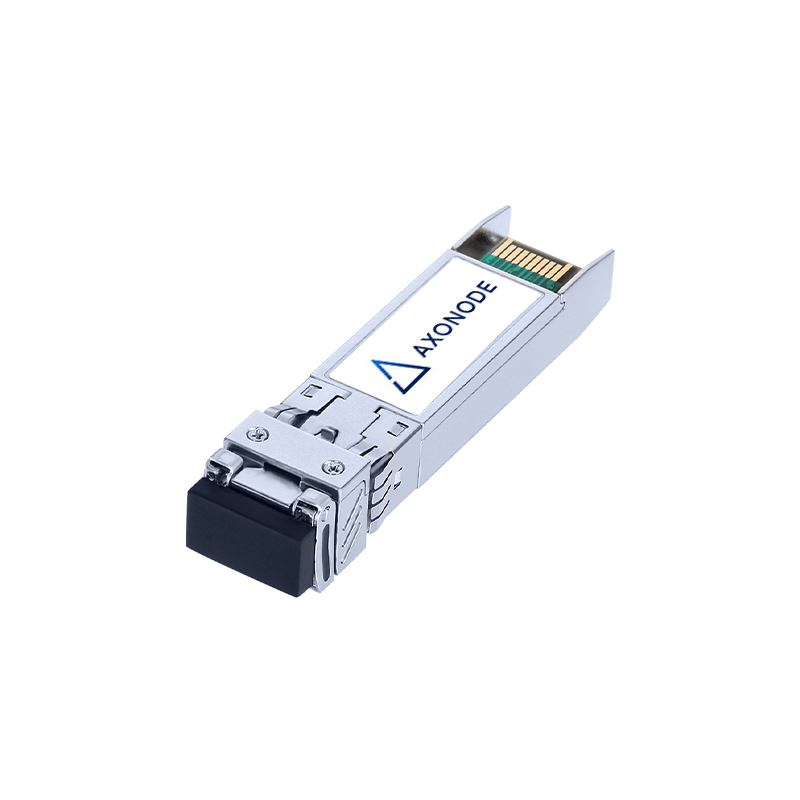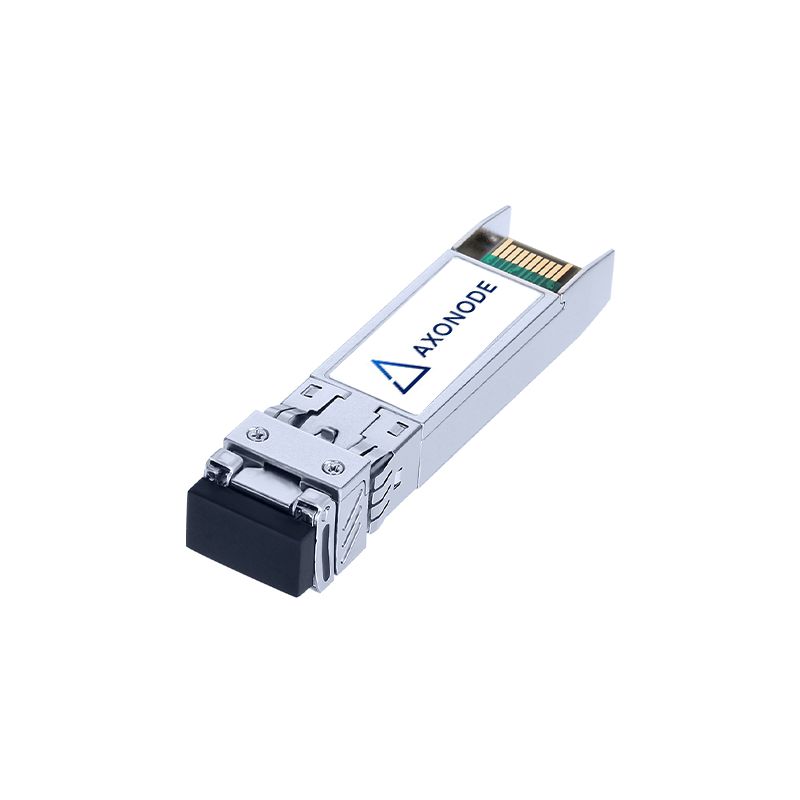
BiDi Optical Transceivers
Explore Axonode BiDi optical transceivers for single-fiber networks, including 1G, 10G, 25G and 100G solutions. Learn how BiDi optics work, compare deployment options, choose the correct wavelength pair and find compatible transceivers for ISP, enterprise and industrial networks.
Specifications
- Product Family
- BiDi Optical Transceivers
- Data Rates
- 1G / 10G / 25G / 100G
- Applications
- ISP, Enterprise, Campus, Metro & Industrial Networks
BiDi Optical Transceivers for Single-Fiber Networks
Deploy More Bandwidth with Existing Fiber
Expand network capacity without installing additional fiber. Axonode helps ISPs and network teams deploy compatible BiDi optics with the correct wavelength pairing, link distance and host-device coding.
What Is a BiDi Optical Transceiver?
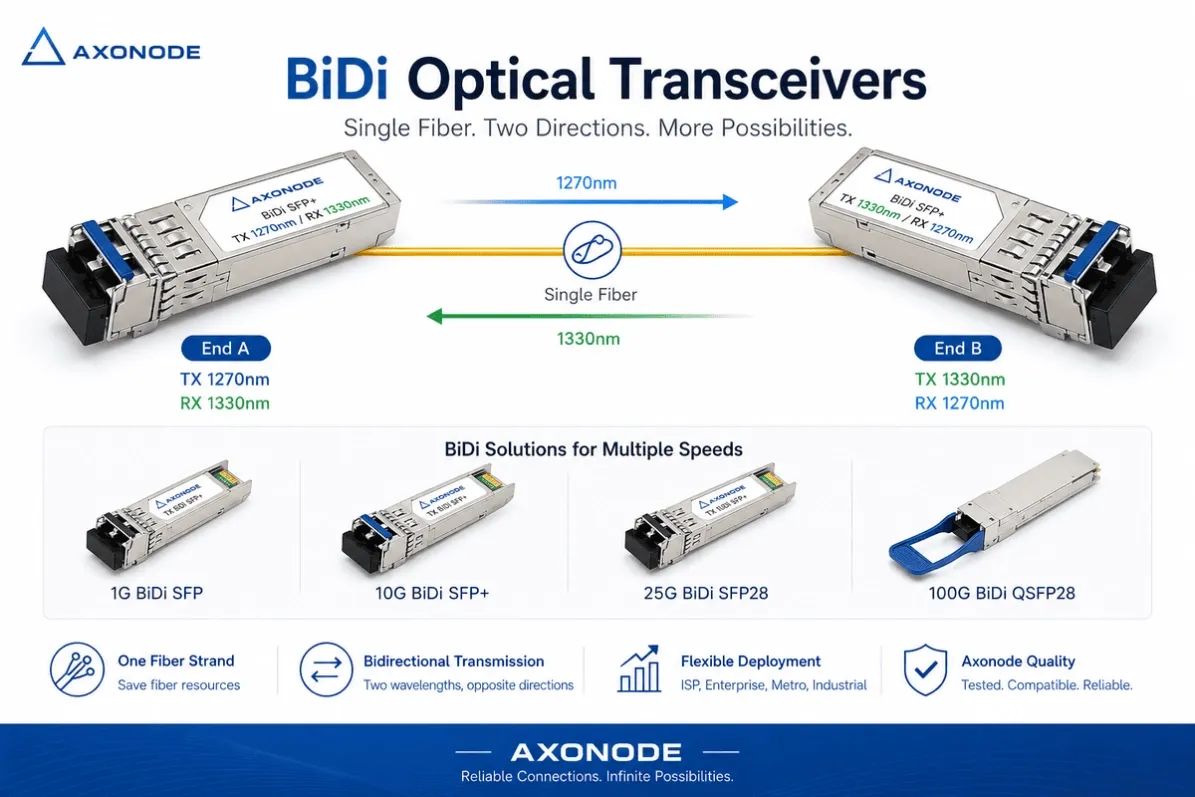
A BiDi, or bidirectional, optical transceiver sends and receives data over a single strand of optical fiber. It uses two complementary wavelengths: one wavelength transmits in one direction, while the paired wavelength transmits in the opposite direction.
Conventional duplex optical links normally use one fiber for transmitting and another for receiving. BiDi optics combine both directions on one fiber, helping network operators preserve valuable fiber capacity for future services and expansion.
Why Network Operators Choose BiDi
BiDi optics are especially useful where available fiber strands, duct space, leasing costs or construction time limit network expansion.
Preserve Limited Fiber
Use existing fiber more efficiently when spare strands are unavailable or reserved for future services.
Reduce Deployment Cost
Avoid or delay new trenching, duct work and additional fiber-leasing commitments.
Add Capacity Faster
Upgrade point-to-point links without waiting for new fiber construction or route expansion.
Support Distributed Sites
Suitable for campuses, regional ISP routes, industrial sites and remote access locations.
Prepare for Expansion
Preserve additional fiber strands for redundancy, new services and later capacity upgrades.
How BiDi Optical Transceivers Work
A wavelength-selective optical filter inside each module separates the transmit and receive signals, allowing both directions to share one fiber strand.
Different TX Wavelengths
Each end transmits on a different optical wavelength.
Complementary RX Wavelengths
The receiver at each end listens for the wavelength transmitted from the opposite side.
One Fiber Strand
Both transmission directions travel through the same strand of single-mode fiber.
Matched Pair Required
The two modules must have complementary TX and RX wavelength combinations.
Find BiDi Optics by Deployment
Start with the network problem, then confirm the required data rate, reach, wavelength pair and platform compatibility.
Regional and Rural ISP
Extend access and backhaul links where fiber leasing, additional construction or route expansion is expensive.
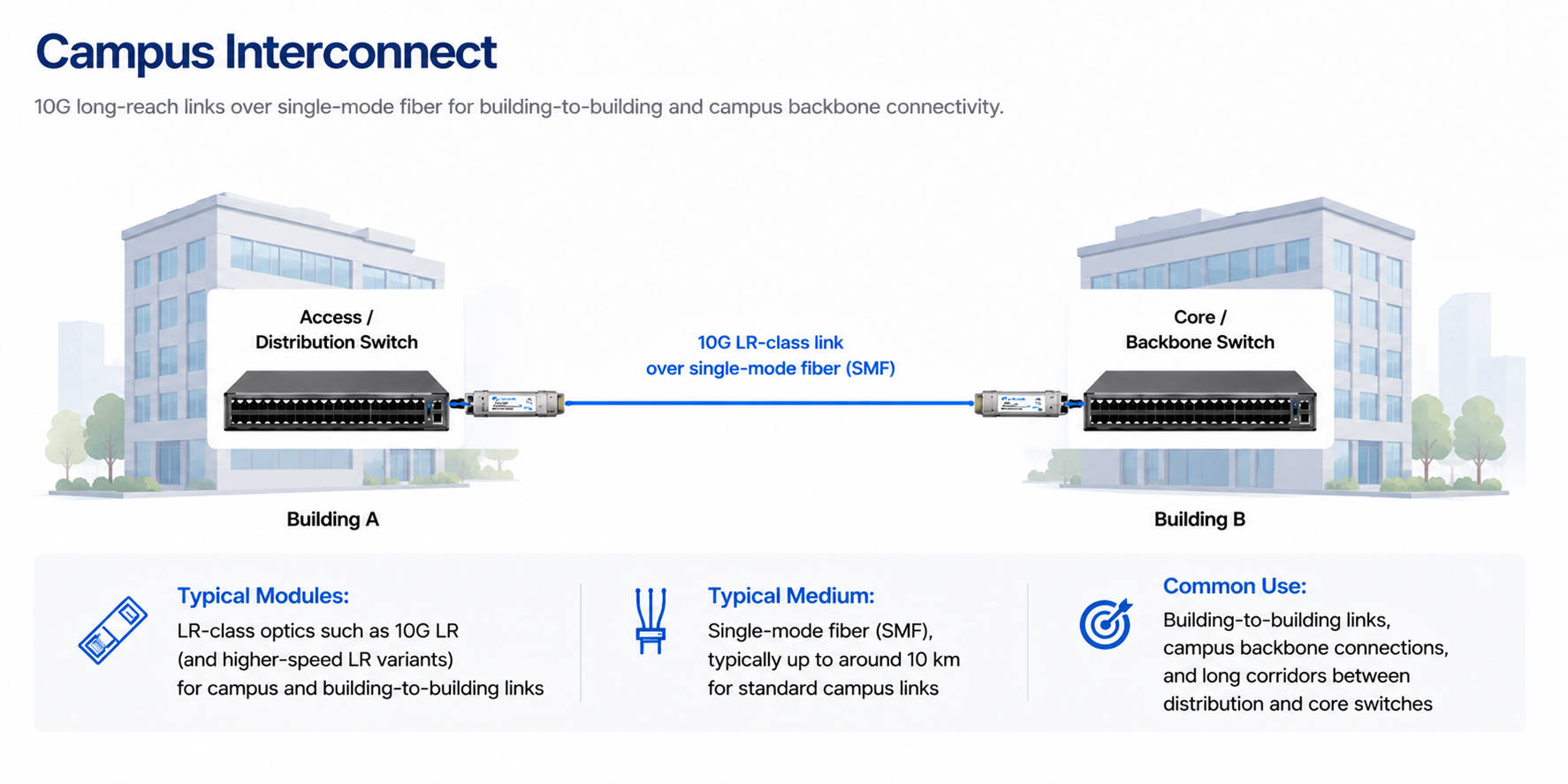
Enterprise Campus
Connect buildings, network rooms and remote facilities over existing single-mode fiber.
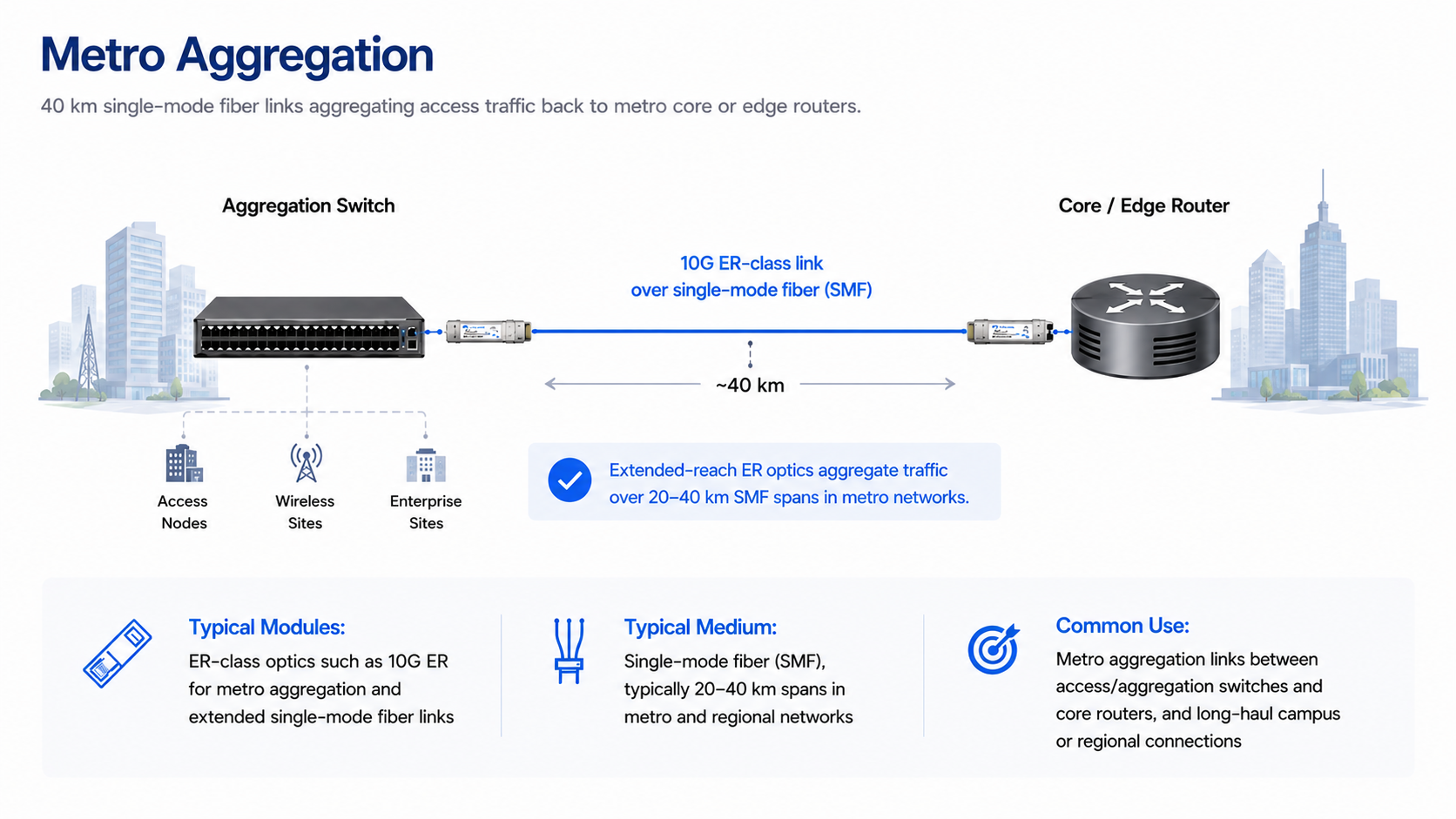
Metro and Aggregation
Increase capacity between access, aggregation and metro sites without consuming an additional fiber strand.
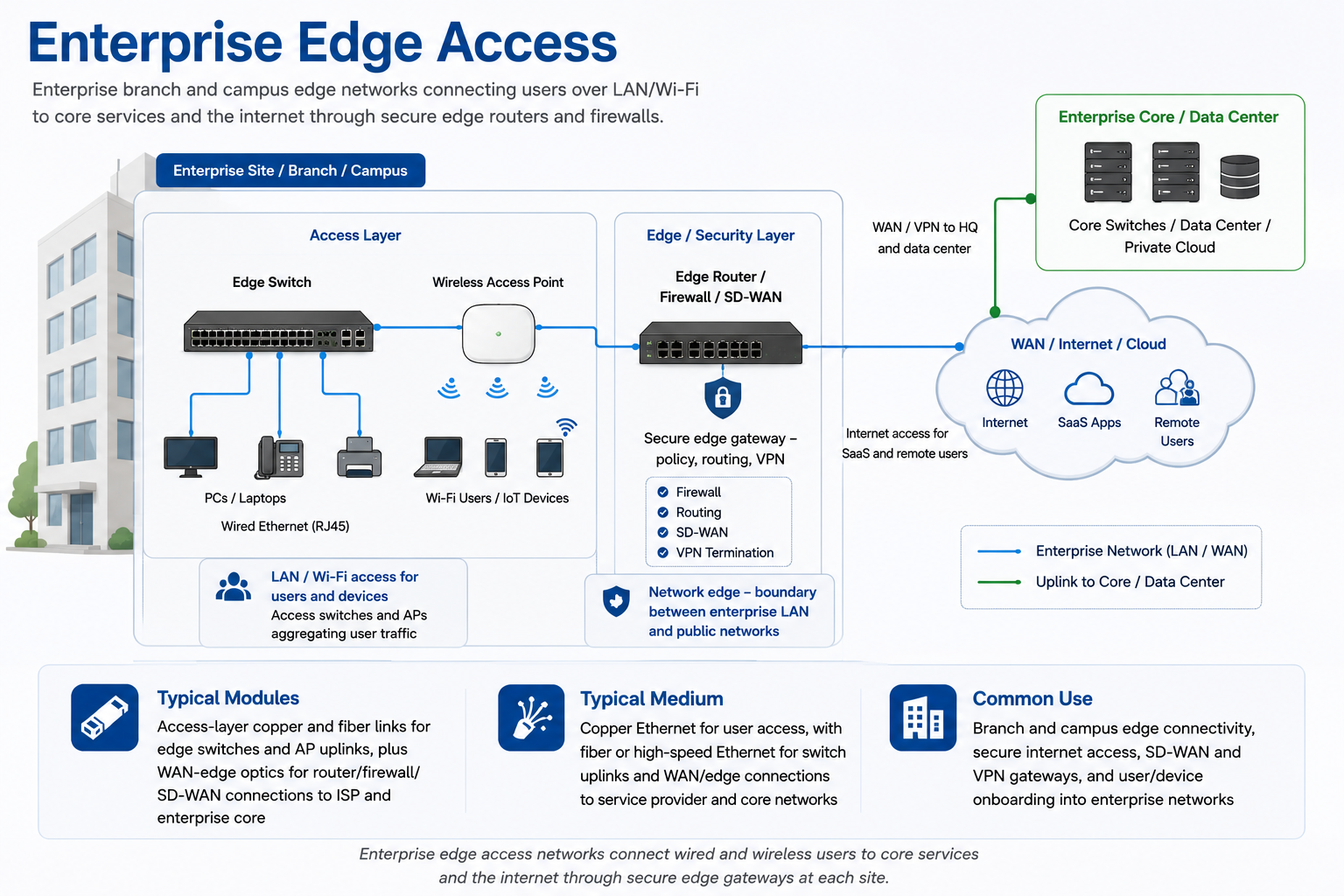
Fiber-Constrained Upgrade
Add new bandwidth to an existing route when only one usable fiber strand is available.
Browse BiDi Transceivers by Data Rate
Available configurations may vary by wavelength, distance, temperature and equipment compatibility.
1G BiDi SFP
- FTTH and access networks
- Industrial Ethernet
- Legacy network upgrades
10G BiDi SFP+
- ISP access and backhaul
- Campus interconnection
- Enterprise edge networks
100G BiDi QSFP28
- Metro aggregation
- Regional backbone
- Data-center interconnection
Typical BiDi Deployment Scenarios
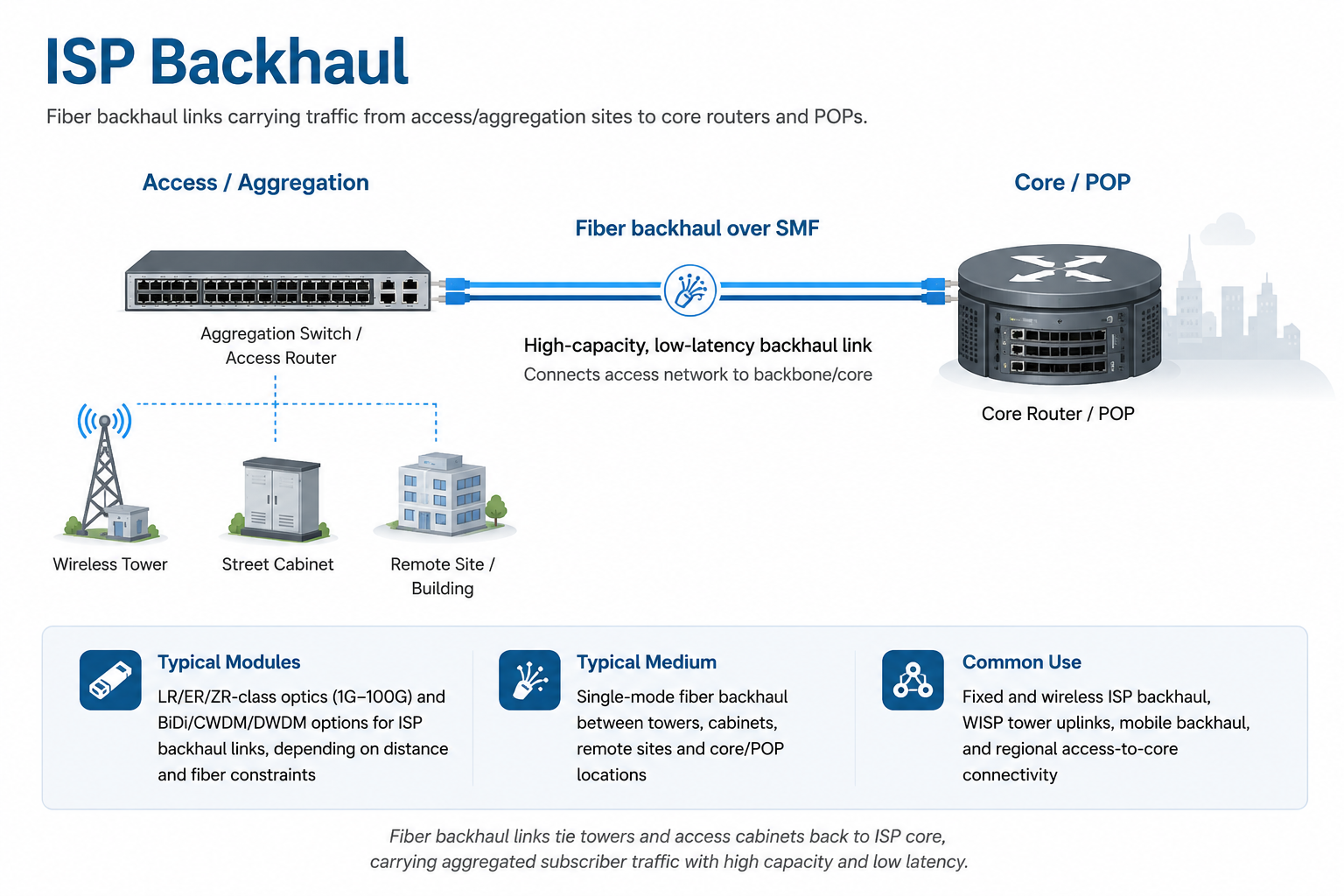
ISP Access and Backhaul
Deploy links between access sites, aggregation switches and local points of presence while preserving scarce fiber resources.
Enterprise Campus
Connect buildings or network rooms across a campus using one strand of existing single-mode fiber.
Industrial and Remote Networks
Extend Ethernet connectivity to factories, warehouses, utilities and remote equipment locations.
Metro Aggregation
Increase capacity between metro sites where fiber availability, duct space or leasing costs limit expansion.
BiDi vs Dual-Fiber Optical Transceivers
BiDi is valuable when fiber is constrained. Dual-fiber optics may remain simpler when conventional fiber pairs are readily available.
| Comparison | BiDi Optical Transceivers | Dual-Fiber Optical Transceivers |
|---|---|---|
| Fiber strands required | One fiber strand | Two fiber strands |
| Connector type | Usually Simplex LC | Usually Duplex LC |
| Wavelength operation | Complementary TX and RX wavelengths | Often the same nominal wavelength at both ends |
| Fiber utilization | Preserves available fiber capacity | Uses a conventional transmit and receive fiber pair |
| Pairing requirement | Correct wavelength pair must be confirmed | No complementary wavelength pairing required |
| Deployment process | Requires wavelength and optical-budget verification | Often simpler where fiber pairs are available |
| Typical use | Fiber-constrained links and capacity expansion | Conventional point-to-point optical links |
| Expansion value | Frees additional strands for future services | Standard deployment using an existing fiber pair |
When BiDi May Not Be the Best Choice
BiDi is not automatically the correct choice for every optical link. The decision should reflect fiber availability, operations, link budget and equipment support.
Dual fiber may be simpler when:
- Spare fiber pairs are readily available
- The patching system is standardized around Duplex LC
- The operations team prefers one common optic type
- The platform has limited support for a required BiDi option
- Wavelength-pair management adds unnecessary complexity
Choose based on the complete link
The correct option depends on fiber availability, equipment compatibility, connector type, optical loss, temperature and operational requirements—not only the transceiver price.
Review your link with Axonode →Before You Order BiDi Optics
Confirm these six items before selecting the module and wavelength pair.
Data Rate
Confirm whether the link requires 1G, 10G, 25G or 100G.
Wavelength Pair
Confirm the complementary module required at each end.
Transmission Distance
Select reach according to total route loss, not distance alone.
Fiber and Connector
Confirm the fiber type and required Simplex LC interface.
Equipment Compatibility
Provide the equipment brand, exact model and software version.
Operating Environment
Confirm commercial, extended or industrial temperature needs.
Common BiDi Wavelength Pairing Examples
These examples illustrate the pairing principle. Available wavelength combinations depend on data rate, distance and product design.
with
Example: selected 10G BiDi link configurations.
with
Example used in selected extended-distance designs.
Common BiDi Deployment Mistakes
Using Identical Modules
Modules with the same transmit wavelength will not form a working complementary pair.
Selecting by Distance Only
Fiber loss, receiver sensitivity, overload and engineering margin must also be checked.
Choosing the Wrong Connector
Most Ethernet BiDi modules use Simplex LC rather than Duplex LC.
Ignoring Compatibility Coding
Correct optical specifications do not automatically guarantee host-device compatibility.
Mixing Unconfirmed Products
Check wavelength, rate, optical budget and coding before mixing products from different sources.
Compatibility Prepared for Your Network
Axonode BiDi optical transceivers can be programmed for major switch and router platforms. Compatibility is confirmed according to the exact equipment model, software environment and deployment requirement.
Need another platform? Share the equipment model and Axonode will confirm the required coding before shipment.
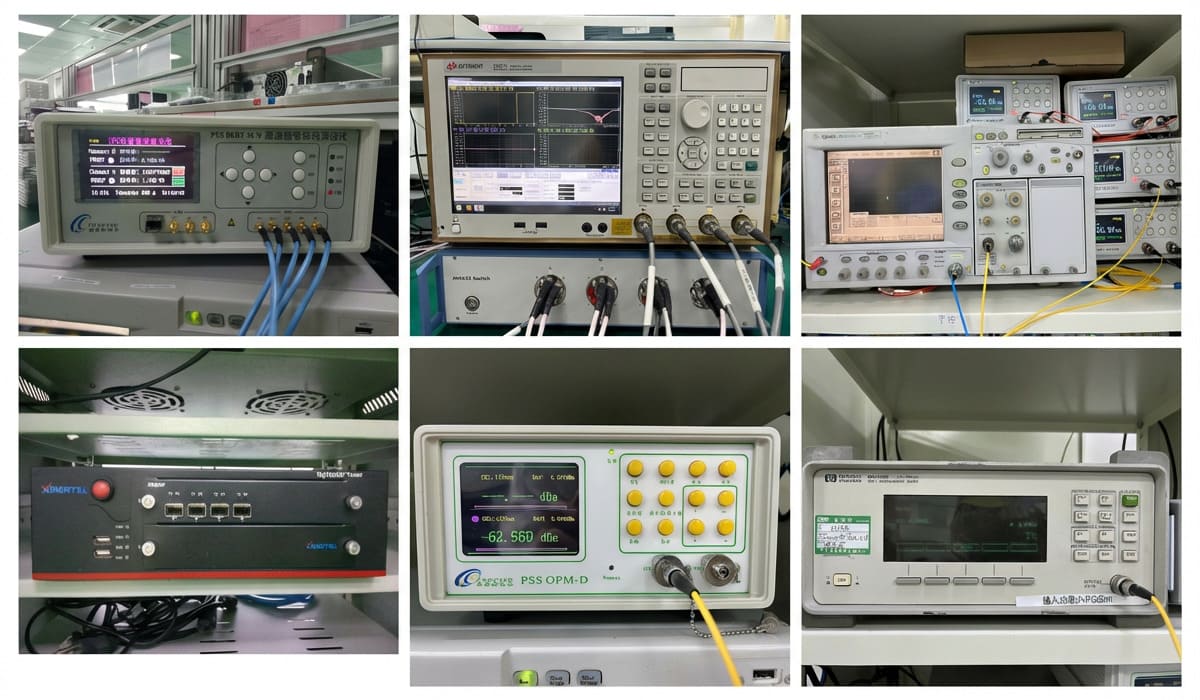
Comprehensive Testing Before Shipment
Testing can be arranged according to the module type, compatibility requirement and operating environment.
- Transmit optical power verification
- Receiver performance and link testing
- TX and RX wavelength verification
- DDM / DOM monitoring checks
- Compatibility coding confirmation
- Temperature testing when required
Frequently Asked Questions
1. What is a BiDi optical transceiver?
A BiDi optical transceiver sends and receives data over one fiber strand by using different wavelengths in opposite directions.
2. Do BiDi transceivers need to be used in pairs?
Yes. The transmit wavelength at one end must match the receive wavelength at the opposite end.
3. Can I use two identical BiDi modules together?
Usually no. Two modules with the same transmit and receive wavelength arrangement will not form a complementary pair.
4. Does BiDi require a special switch?
Normally no special BiDi switch is required. However, the host port must support the correct form factor, data rate and compatibility coding.
5. Does BiDi work over multimode fiber?
Most long-reach Ethernet BiDi products are designed for single-mode fiber. Always use the fiber type stated in the individual product specification.
6. Can BiDi replace a standard LR transceiver?
It may replace a conventional dual-fiber link when the data rate, distance, connector, optical budget and host-device compatibility are correct. Both ends must be replaced with the correct BiDi pair.
7. How far can BiDi transceivers transmit?
Available reaches vary by product family. The actual supported route depends on total optical loss, including fiber attenuation, connectors, splices, patch panels and engineering margin.
8. Can I use a longer-reach BiDi module on a short link?
Possibly, but receiver overload must be checked. Some short links may require an optical attenuator to keep received optical power within the permitted range.
9. Can BiDi modules from different brands work together?
They may work when wavelength pairing, data rate, optical specifications and host compatibility all match. A confirmed matched pair is recommended to reduce deployment risk.
10. What does Simplex LC mean?
Simplex LC uses one LC optical connection and one fiber strand, unlike a Duplex LC connection that normally uses two fiber strands.
11. How do I avoid wavelength-pairing mistakes?
Confirm the TX and RX wavelength at both ends. Each module's transmit wavelength must match the receive wavelength of the module installed at the opposite end.
12. What information should I provide before ordering?
Provide the equipment models at both ends, data rate, required distance, fiber type, connector, operating temperature and estimated route loss.
Need Help Selecting the Right BiDi Pair?
Share your switch model, required data rate, transmission distance, fiber type and operating environment. Axonode will help confirm the correct wavelength pair, compatibility coding and optical requirements before shipment.