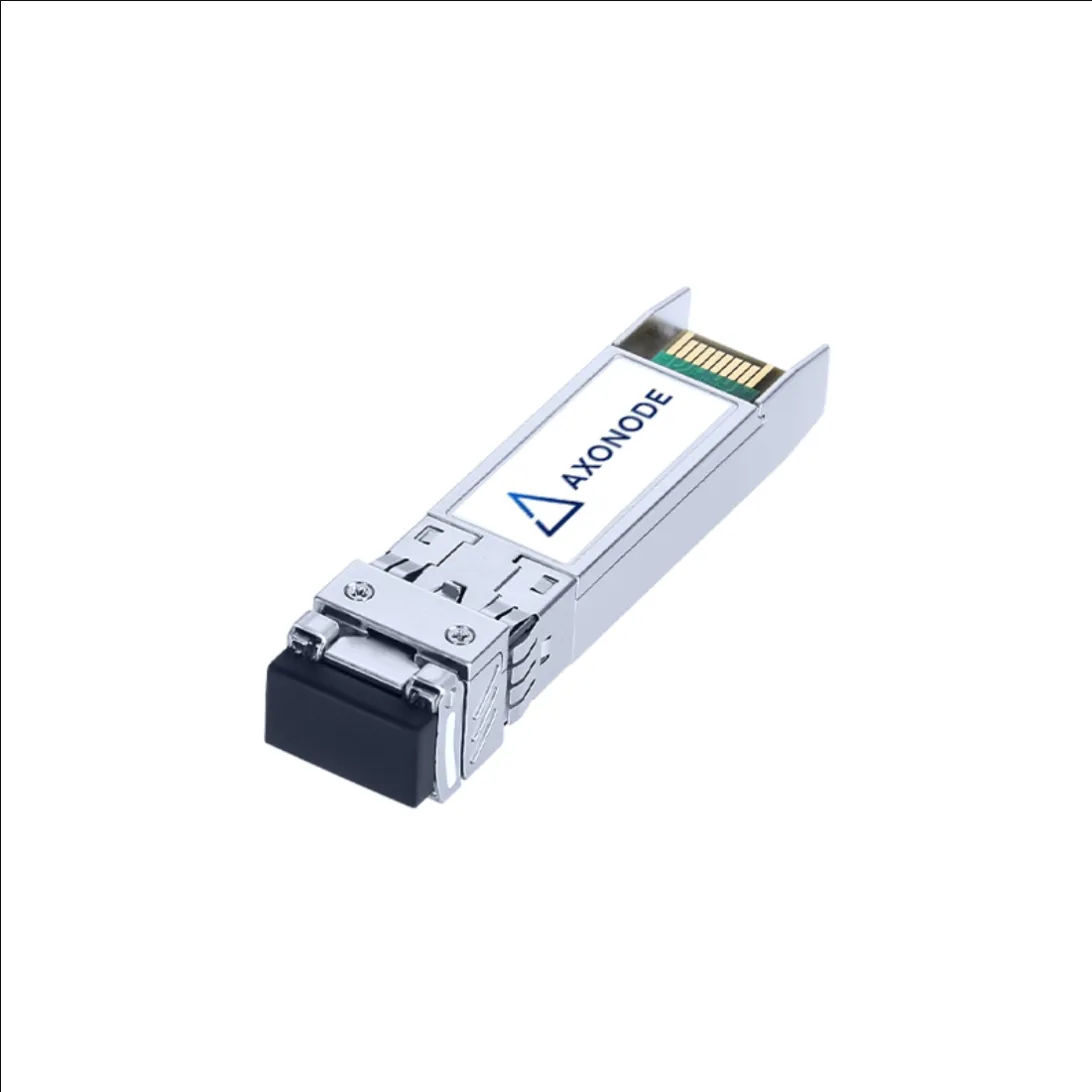
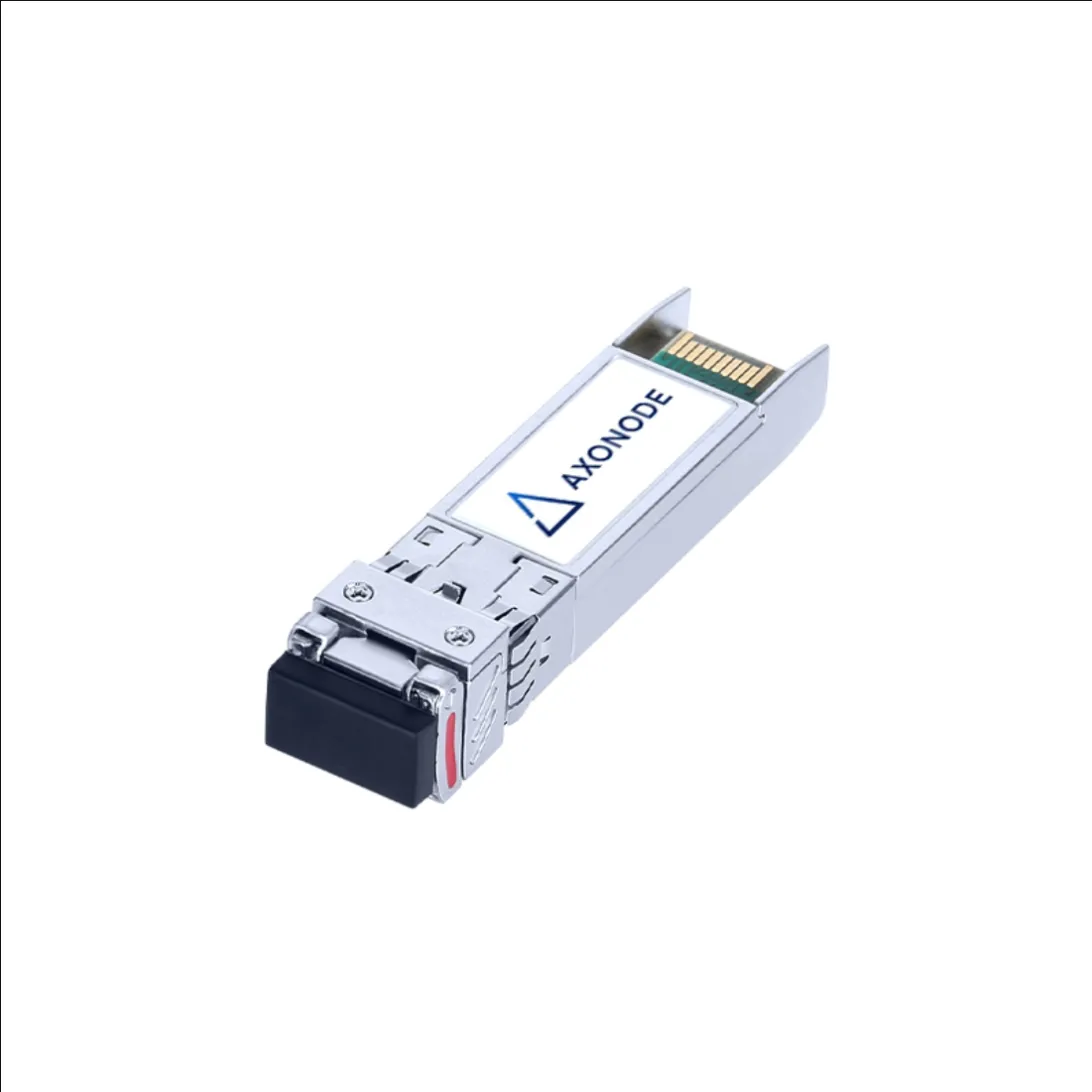
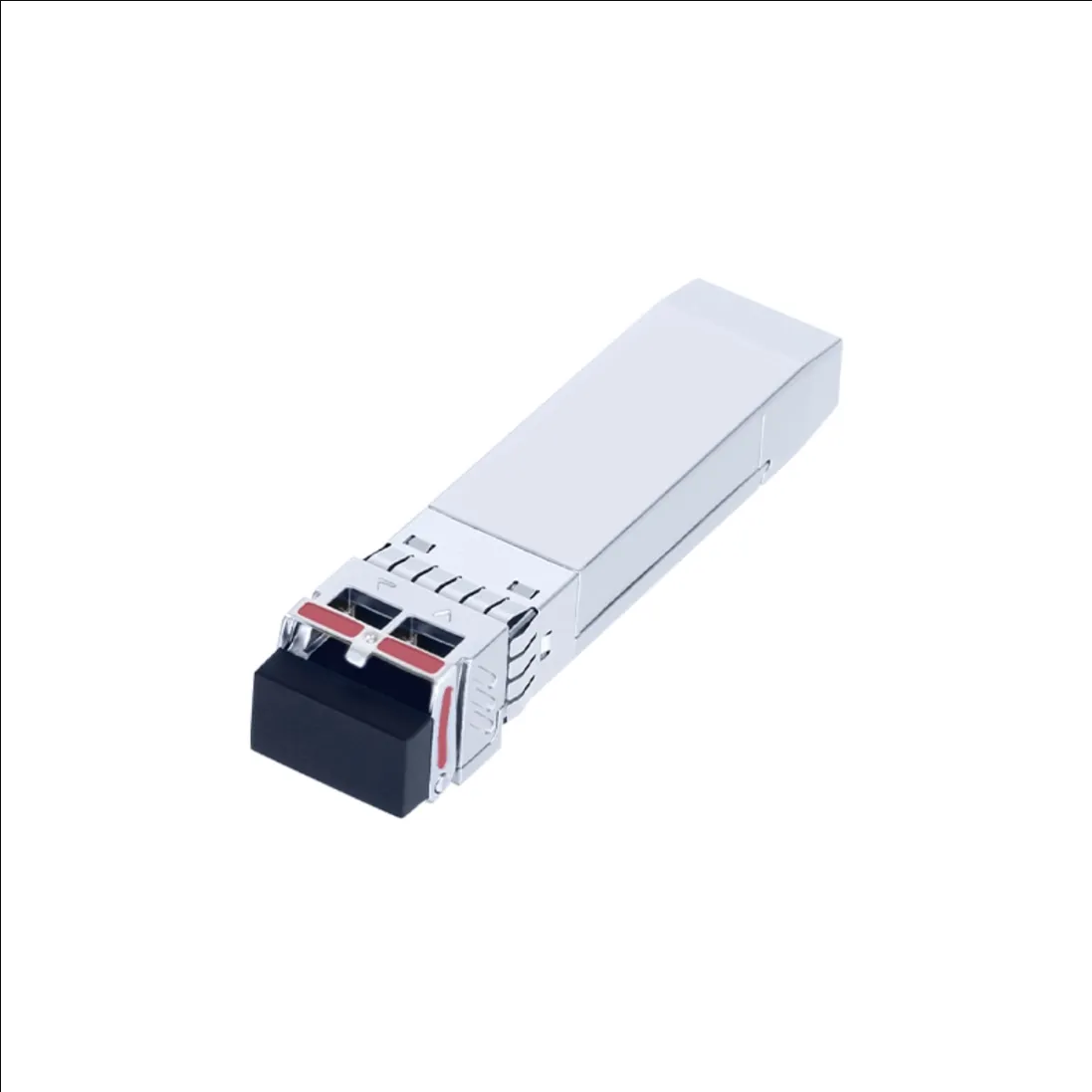
10G DWDM SFP+ ITU C61 40km Optical Transceiver
Commercial-temperature 10G DWDM SFP+ for ITU channel C61 (1528.77nm), duplex-LC single-mode links up to 40km, with cooled EML/PIN optics and DDM/DOM.
ITU C61 · 1528.77nm · 40km SMF · Duplex LC
A commercial-temperature 10G DWDM SFP+ module for a fixed 100GHz C-band channel. It uses a cooled EML transmitter and PIN receiver. Confirm the host, both-end channel assignment, passive-path loss and operating temperature before quotation.
Where this variant fits
Deployment
Dual-fiber 10G DWDM access, metro and dark-fiber capacity expansion up to 40km.
Optical path
ITU channel C61 at 1528.77nm through a matching 100GHz DWDM mux/demux path.
Confirm first
Host coding, channel plan, route loss, connector polarity, DDM requirements and temperature class.
Verified optical specifications
| Product type | 10G DWDM SFP+ optical transceiver |
|---|---|
| Channel / center wavelength | ITU C61 / 1528.77nm, 100GHz grid |
| Data rate | 10.3Gbps nominal |
| Maximum reach | Up to 40km over single-mode fiber; total route loss governs |
| Optical interface | Duplex LC |
| Transmitter / receiver | Cooled EML / PIN photodiode |
| Average transmit power | -1 to +2dBm |
| Receiver sensitivity | Maximum -15.5dBm |
| Receiver overload | Minimum +0.5dBm |
| Calculated source-limit budget | 14.5dB before mux/demux, fiber, connector, splice and engineering margins |
| Digital diagnostics | DDM/DOM supported |
| Power / maximum current | 3.3V / 550mA |
| Operating case temperature | 0 to +70°C commercial variant |
The 14.5dB value is calculated from the documented minimum transmit power and receiver sensitivity. It is not a guaranteed field margin.
Pre-order engineering checks
- Confirm the exact switch, router or line-card model, software release and 10G SFP+ port mode at both endpoints.
- Verify ITU C61 is assigned at both ends of this dual-fiber path and matches the passive DWDM ports.
- Calculate or measure total loss through the fiber, mux/demux units, connectors and splices, then retain an engineering margin.
- Confirm duplex LC polarity, connector cleanliness, coding, DDM visibility and the 0 to +70°C environment.
Compatibility and validation
SFP+ form factor does not prove host acceptance. Validate the required coding profile, software behavior, DDM visibility and link establishment in the intended device and channel plan. Optical interoperability and host compatibility are separate checks.
Frequently asked questions
Which DWDM channel does this exact variant use?
It uses ITU channel C61 at 1528.77nm on a 100GHz C-band grid. Confirm C61 in the transceiver labels, passive mux/demux ports and approved BOM.
Do both endpoints use C61 on a dual-fiber link?
A matched dual-fiber DWDM path normally uses the same C61 channel at both endpoints. This is not a complementary-wavelength BiDi pair; still confirm mux/demux direction and fiber polarity.
How should the 40km optical budget be checked?
The source limits give 14.5dB from -1dBm minimum transmit power to -15.5dBm receiver sensitivity. Subtract every passive and fiber loss plus the chosen engineering margin.
Is this the same optical design as the 80km version?
No. This 40km variant uses a PIN receiver and has different transmit power, sensitivity, overload and current limits. Do not exchange the two specifications.
Is an attenuator required on a low-loss path?
Not automatically. Compare expected or measured receive power with the +0.5dBm overload limit and -15.5dBm sensitivity, then add attenuation only when the full power range and margin justify it.
Will it work in every 10G SFP+ port?
No. Confirm the host model, software, port mode, coding policy and DDM requirements. A mechanical and electrical fit does not guarantee platform acceptance.
Does the commercial variant support DDM/DOM?
Yes. The source supports digital diagnostics, but the readings exposed by the host still depend on its software and coding behavior.
Can the commercial module be used below 0°C?
No such use is covered by this variant. Its specified case-temperature range is 0 to +70°C. Quote the separate industrial-temperature version for -40 to +85°C requirements.
What should be checked if the DWDM link stays down?
Check host recognition, port mode, C61 assignment, mux/demux direction, LC polarity, connector cleanliness, total path loss, received power and alarms at both ends before replacing parts.
Review the C61 40km path before quotation
Send both host models and software, the C61 channel plan, mux/demux insertion loss, route length and measured loss, connector type, temperature, coding/DDM requirements, quantity and required date.
Request a DWDM configuration reviewFinal specifications follow the approved quotation and product datasheet.