OSFP 800G Transceiver Technical Datasheet
OSFP 800G transceiver datasheet guide: types, optics, power, size and breakout options, with the checks to run before ordering. Confirm figures against the supplier datasheet.

Bottom line: If you are specifying OSFP 800G modules, start with the host port, the fiber type and the distance, and confirm the figures in this guide against the supplier datasheet for the exact module.
How should you use this OSFP 800G datasheet guide?
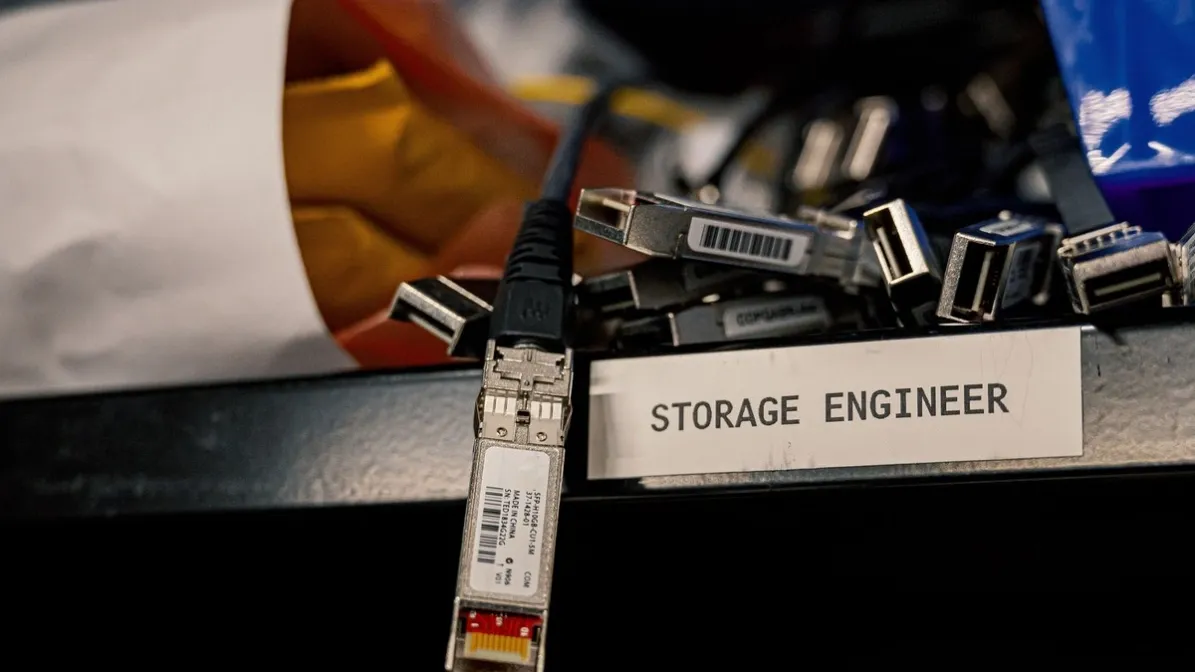
An OSFP 800G transceiver is a pluggable optical module that carries 800 Gigabit Ethernet over fiber. This page is written as a datasheet guide: it collects the figures an engineer or buyer checks first — module type, wavelength, fiber, reach, connector, power and size — so a wrong module can be caught before it is ordered.
The figures below are examples taken from a vendor datasheet for OSFP 800G modules (Cisco OSFP 800G Transceiver Modules Data Sheet, updated January 2026). They are not a promise that every OSFP 800G module on the market matches them. Power, reach and optical levels vary by supplier and by module, so confirm every figure for the exact module you buy against its supplier datasheet.
What are the key OSFP 800G facts at a glance?
| Item | OSFP 800G |
|---|---|
| Form factor | OSFP (Octal Small Form-factor Pluggable), with an integrated closed-top heat sink |
| Electrical interface | 800GAUI-8 — eight electrical lanes |
| Breakout options | 800GE, 2 x 400GE, 4 x 200GE and 8 x 100GE, depending on the module and host |
| Management interface | CMIS 5.3 |
| Standards | OSFP MSA Rev. 5.1, IEEE 802.3, 802.3ck, 802.3db and 802.3df |
| Laser safety | Class 1 laser product |
| Typical use | Data center, high-performance computing, enterprise core and service provider links |
Module types: which one matches your fiber and distance?
Choose the module type from the fiber you already have and the distance you need — not from the speed alone. All of the types below carry 800G, but they use different fibers, connectors and reaches.
| Module type | Wavelength | Fiber and reach | Connector | Power, typical / maximum |
|---|---|---|---|---|
| 800G OSFP VR8 | 850 nm | Multimode fiber; 30 m on OM3, 50 m on OM4 and OM5 | Dual MPO-12 APC | 12.9 W / 16 W |
| 800G OSFP VR8P | 850 nm | Multimode fiber, parallel optics | MPO-16 APC | Confirm against supplier datasheet |
| 800G OSFP DR8 | 1310 nm | Single-mode fiber; 500 m | Dual MPO-12 APC | 14.2 W / 16 W |
| 800G OSFP DR8P | 1310 nm | Single-mode fiber, parallel optics | MPO-16 APC | Confirm against supplier datasheet |
| 800G OSFP 2 x 400G-FR4 | 1271 / 1291 / 1311 / 1331 nm | Single-mode fiber; 2 km | Dual duplex LC UPC | 13.2 W / 14.5 W |
Pull-tab colors in the vendor datasheet help tell the modules apart on the shelf: purple for VR8 and VR8P, orange for DR8 and DR8P, and green for 2 x 400G-FR4. Do not rely on color alone — read the module label and confirm the part number.
What optical power and loss figures should you check?
Transmit power, receive power and insertion loss decide whether a link has enough margin on a real span. The values below are the vendor-datasheet examples for the three main types; treat them as a reference, and confirm the exact values for the module you buy.
| Module type | Transmit power (per lane) | Receive power (per lane) | Insertion loss |
|---|---|---|---|
| 800G OSFP VR8 | -3.5 to 2.1 dBm | -5.6 to 2.1 dBm | Up to 1.6 dB |
| 800G OSFP DR8 | -1.0 to 2.2 dBm | -3.3 to 2.2 dBm | Up to 1.9 dB |
| 800G OSFP 2 x 400G-FR4 | -2.1 to 3.5 dBm | -5.1 to 3.5 dBm | Up to 2.6 dB |
Loss does not come only from the fiber. Connectors, splices and patch panels each add insertion loss, and the total loss budget must include them. The connector loss figures in this guide are examples from the vendor datasheet; check the loss budget for your span before you order.
What are the mechanical, electrical and environmental limits?
The mechanical and electrical figures below are the limits for OSFP 800G modules in the vendor datasheet. If a limit does not match your environment, confirm the figure for your module before ordering.
| Item | Figure |
|---|---|
| Case temperature range | 0°C to 70°C |
| Supply voltage | 3.3 V (typical) |
| Module width × length | 22.58 mm × 107.8 mm |
| Module height | 13.0 mm |
| Power consumption | Up to 16 W (varies by module) |
| Hot-pluggable | Yes |
| Operating distance | Refer to the module type table above |
What should you check for breakout and cabling?
An OSFP 800G module can carry 800G, 2 x 400G, 4 x 200G and 8 x 100G, depending on the module and host. But breakout is not automatic: the host port must support the breakout mode, and the breakout cable must match it.
The examples below are a starting point for checking breakout and cabling. Confirm the exact support and part numbers for your host and module before ordering.
| Breakout mode | Cable type | Use case |
|---|---|---|
| 800G direct | Direct OSFP cable | 800G to 800G link |
| 2 x 400G | MPO breakout cable | 800G host to two 400G ports |
| 4 x 200G | MPO breakout cable | 800G host to four 200G ports |
| 8 x 100G | MPO breakout cable | 800G host to eight 100G ports |
What should you check before you order an OSFP 800G module?
Before you order, check the six points below. A mistake in any one of them can mean a module that does not fit, does not link, or does not pass the power budget.
- Module type: does it match the fiber type and distance?
- Connector type: does it match the fiber patch panels and host?
- Host compatibility: is the module listed as supported on your host platform?
- Power and thermal: does the host support the module's power and heat?
- Distance and loss budget: does the link budget cover the span, connectors and splices?
- Firmware and management: does the host support the module's CMIS version?
What do buyers ask most about OSFP 800G transceivers?
Is an OSFP 800G transceiver the same as a QSFP-DD 800G transceiver?
No. Both carry 800G, but they are different form factors with different mechanical dimensions, electrical interfaces and host ports. An OSFP module does not fit a QSFP-DD port, and a QSFP-DD module does not fit an OSFP port.
Can an 800G OSFP module run as 2 x 400G?
Yes, some OSFP 800G modules and hosts support breakout to 2 x 400G, and the 2 x 400G-FR4 module is a dedicated two-channel design. But breakout depends on the module and host, so confirm support for your exact combination before ordering.
What is the difference between OSFP VR8 and OSFP DR8?
VR8 is for multimode fiber over short distances — 30 m on OM3 and 50 m on OM4 and OM5 — while DR8 is for single-mode fiber up to 500 m. The two types use different wavelengths (850 nm for VR8, 1310 nm for DR8) and different connectors, so they are not interchangeable.
What does 2 x 400G-FR4 mean?
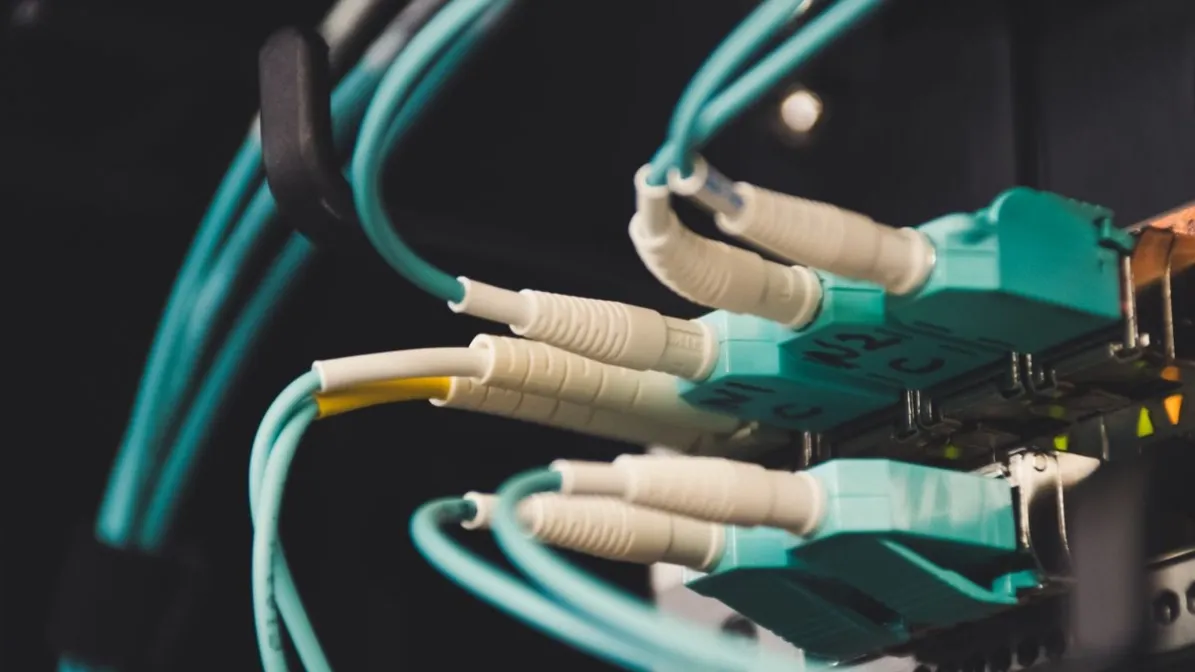
It means one OSFP module carries two 400G channels, each using four wavelengths (1271, 1291, 1311 and 1331 nm) over single-mode fiber for up to 2 km. Each channel is a 400G-FR4 link, and the module uses dual duplex LC UPC connectors.
What is the next step before you order?
As a supply-chain partner, Axonode can help confirm the option for your equipment. Contact us and send your platform, distance and quantity to confirm the options before ordering.