100G BiDi and WDM Strategies for Fiber-Constrained ISPs in Latin America
A concise, field‑tested guide to choosing SFP/SFP+/QSFP28 optics for small and regional ISP networks. Start from the link type--access, aggregation or edge--then narrow down by speed, distance, fiber

Fiber-Constrained ISP Strategy
100G BiDi and WDM Strategies for Fiber-Constrained ISPs in Latin America
For many Latin American ISPs, the real bottleneck is not port speed. It is limited, expensive, and difficult-to-expand fiber infrastructure. 100G BiDi, CWDM, and DWDM can help operators unlock more capacity from existing fiber before committing to new civil works or long-term fiber leases.
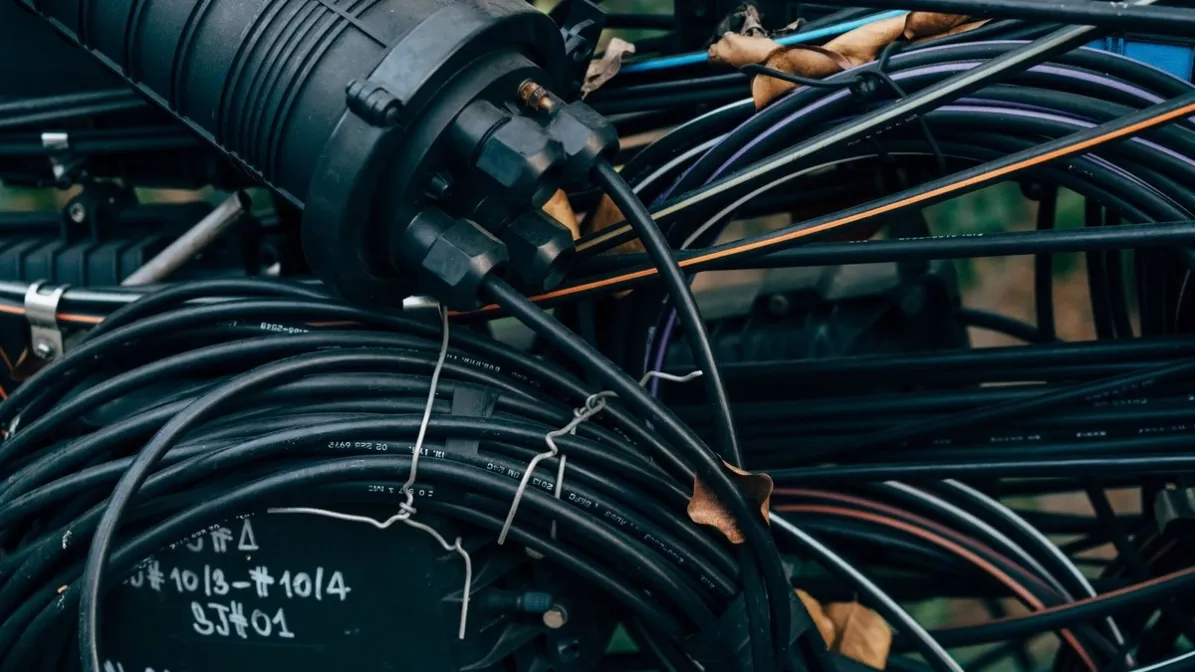
In many Latin American networks, the real bottleneck is not port speed, but the limited and expensive fiber plant.
Between cities, across mountains, or along coastal routes, the monthly cost of leasing fiber strands can dominate the budget. Every additional strand becomes a long-term commitment. That is why 100G BiDi and CWDM/DWDM strategies are attractive for regional ISPs and carriers: they help squeeze more capacity out of every rented fiber and delay costly new route construction.
The business logic is simple
If fiber is expensive, hard to lease, or difficult to deploy, the most valuable optics strategy is not always the cheapest module. It is the strategy that increases capacity per strand while keeping deployment risk under control.
What 100G BiDi Actually Solves
BiDi, or bidirectional optical transceivers, use two wavelengths on a single fiber to carry traffic in both directions. Compared with traditional dual-fiber links, this can reduce fiber strand usage by 50%.
100G QSFP28 BiDi modules are available in different distance options, including 10km, 30km, 40km, and extended-reach variants up to around 80km over single-mode fiber. This allows operators to upgrade existing single-fiber 10G links to 100G without pulling or leasing new fiber.
Lower OPEX
Fewer leased strands per route can reduce recurring fiber lease costs.
More Capacity
Higher bit-rate per strand gives operators more room for traffic growth.
Delayed Civil Works
Existing fiber can be reused before committing to new construction projects.
Three Typical Latin American ISP Use Cases
1. City-to-Suburb Metro Rings
Many metro rings connect dense urban cores to suburban access nodes using leased fiber from infrastructure providers. Fiber lease cost per strand can be high, and routes cannot easily be rebuilt once in service.
Using 100G BiDi on existing single fibers can halve strand usage for key segments, keeping the project within budget while still meeting capacity targets.
2. Long Suburban Backhaul Links Running at 10G Today
A common pattern is 10G single-fiber backhaul from suburban aggregation sites into a regional core. When traffic grows, the operator wants 100G capacity but has no short-term option to lease more fibers.
Planning for 100G BiDi on the same fiber, and validating link budget early, creates a practical upgrade path from 10G to 100G without changing the physical route.
3. Fiber Across Mountains, Rural Roads, or Coastal Routes
In many parts of Latin America, civil works for new fiber in mountains, rural roads, and coastal regions can be costly, slow, and politically complex.
Reusing existing fiber with higher-capacity optics, such as 100G BiDi in some segments and CWDM or DWDM in others, is often the most practical way to satisfy demand within budget and timeline.
Where CWDM and DWDM Fit
BiDi solves the single-fiber point-to-point problem. CWDM and DWDM solve the limited-strands, many-services problem by multiplexing multiple wavelengths over the same fiber.
CWDM
CWDM uses fewer, wider-spaced wavelengths. It is usually simpler and more cost-effective for regional networks under roughly 80–100km with moderate traffic growth.
DWDM
DWDM packs many more channels into a fiber and supports longer distances and higher aggregate capacity. It is better suited for backbone and inter-city routes.
Choosing Between BiDi, CWDM, and DWDM
| Constraint / Scenario | Better Fit | Why |
|---|---|---|
| Under 80km, moderate traffic, tight budget | CWDM + 10G/25G optics | Lower CAPEX, simpler operation, easier maintenance |
| 80–160km, growing traffic on limited fiber | 100G BiDi or CWDM | Reuse existing single fiber with more capacity per strand |
| Over 160km, backbone or inter-country routes | DWDM system + 100G optics | Highest capacity and reach, better suited for long-haul backbones |
Planning the Upgrade Path: From 1G and 10G to 100G and Beyond
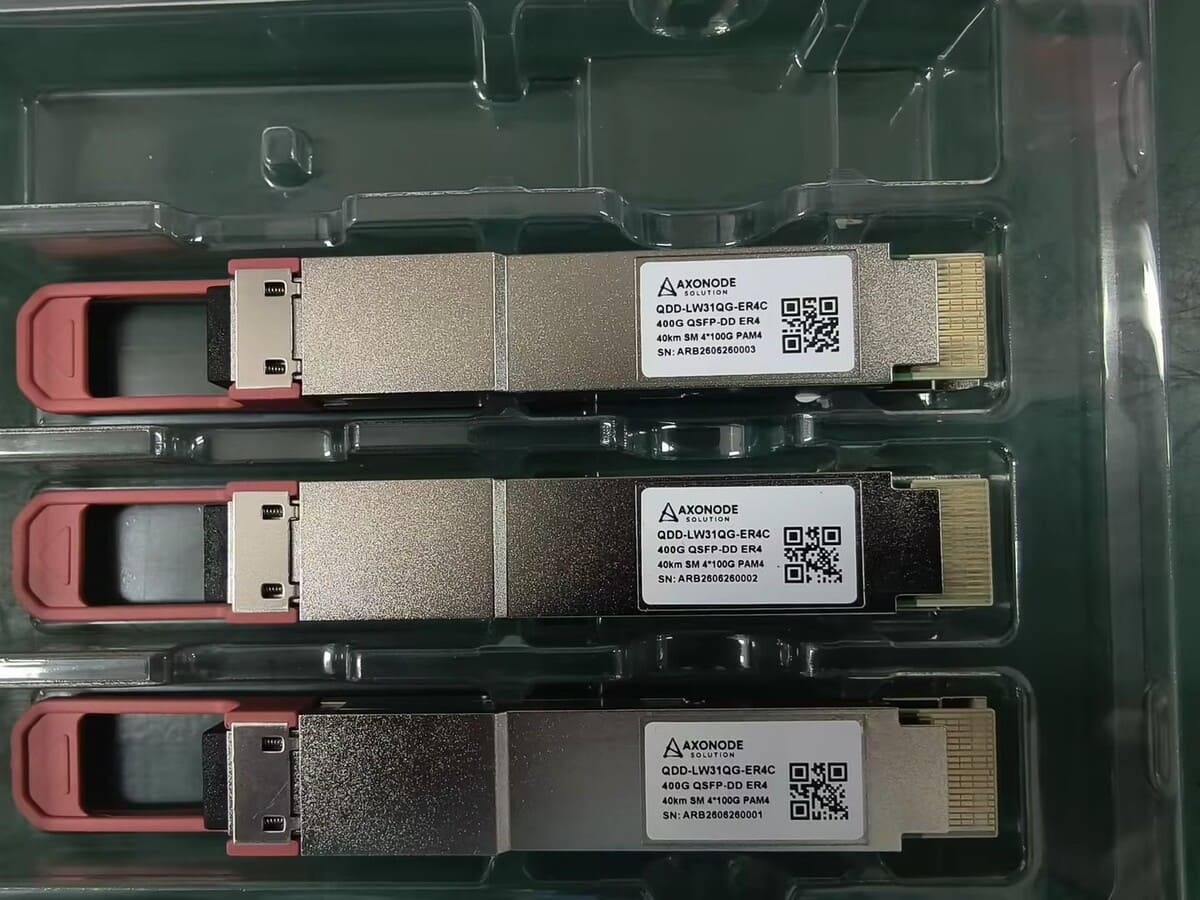
Latin American ISPs rarely redesign their networks from scratch. Most operate a mix of 1G, 10G, and 25G links today, with clear pressure to introduce 100G, and in some data center or backbone environments, 400G over the next few years.
Every optics decision should consider not only the current project, but the next 3–5 years of growth.
1. Audit Current Links
Identify single-fiber and dual-fiber routes, leased strand costs, port types, and vendor platforms.
2. Define a 3-Year Target
Decide which routes need to grow to 10G, 25G, or 100G, and whether more fiber is realistic.
3. Match the Strategy
Use BiDi, CWDM, DWDM, or grey optics based on route distance, fiber count, budget, and growth pressure.
How Axonode Supports Fiber-Constrained ISPs
Axonode is not just an optics supplier. We work as a deployment partner for ISPs, system integrators, and network teams that need practical support before committing to hardware.
- Reviewing current topology, vendor mix, port types, and fiber lease situation.
- Designing an optics BOM using BiDi, CWDM, and DWDM where they reduce total cost and risk.
- Highlighting compatibility risks in multi-vendor environments.
- Suggesting coding or recoding strategies to avoid bulk incompatibility when devices change.
- Turning the final plan into a clear deployment note for engineering, procurement, and management teams.
In practice, this means matching each route with the right optics strategy based on cost per strand, current traffic, future growth, distance, and vendor environment.
Planning a 10G to 100G Upgrade on Limited Fiber?
Share your current speeds, distance, fiber count, vendor platforms, and target capacity. Axonode can help you review whether 100G BiDi, CWDM, DWDM, or grey optics is the better fit for your route.
Discuss Your Fiber Upgrade Plan