How a U.S. Electric Cooperative De-Risked a 400G Core Ring Upgrade
How a U.S. electric cooperative validated 100G and 400G ER4 optics with multi-vendor compatibility and no MOQ before scaling its core ring upgrade.

How a U.S. Electric Cooperative De-Risked Its 400G Core Ring Upgrade
A rural electric cooperative validated 100G and 400G ER4 optics across multi-vendor switches without minimum order commitments.
Quick Answer for Network Buyers
- A U.S. electric cooperative reduced procurement and validation risk by starting with a small pilot.
- Multi-vendor codable 100G and 400G ER4 optics helped avoid vendor lock-in on the core ring.
- No-MOQ sourcing allowed the team to test a few pairs before committing to larger quantities.
- The project followed a phased path: validate 100G ER4 first, then move toward a 400G ER4 core ring pilot.
Background: A Cooperative Growing into a Fiber ISP
A U.S. rural electric cooperative is expanding its fiber footprint and home technology offerings to residential and business members across its service territory.
As bandwidth demand from smart homes, streaming, and cloud applications grows, the cooperative planned to upgrade backbone links between its points of presence to support higher-capacity connectivity.
The network team wanted long-reach 100G and 400G connectivity across POPs without locking into a single hardware vendor and without placing a large order before the design was validated.
The Challenge: Compatibility, Cost, and Commitment
1. Multi-vendor compatibility
The cooperative uses equipment from more than one switch vendor and wants the flexibility to evolve its hardware over time. Optics coded for only one platform can become difficult to reuse if core switches change later.
2. Total cost versus long-term flexibility
Another supplier offered a lower unit price, but the modules were locked to one vendor's equipment. The lower price created a hidden risk: future hardware changes could turn those modules into stranded inventory.
3. Minimum order quantity for a pilot
The same supplier required a minimum order of 20 units. For a project still in validation, the engineering team did not want to commit to that quantity before proving the design in its own environment.
The Core Problem
The engineering team needed to start small, keep options open across switch vendors, and stay on budget without betting the project on a vendor-locked quote.
The Solution: Flexible ER4 Optics and a Phased Testing Plan
After several technical discussions, the cooperative chose a phased approach built around flexible 100G/400G ER4 optics, small-batch sourcing, and practical network validation.
Multi-vendor codable ER4 optics
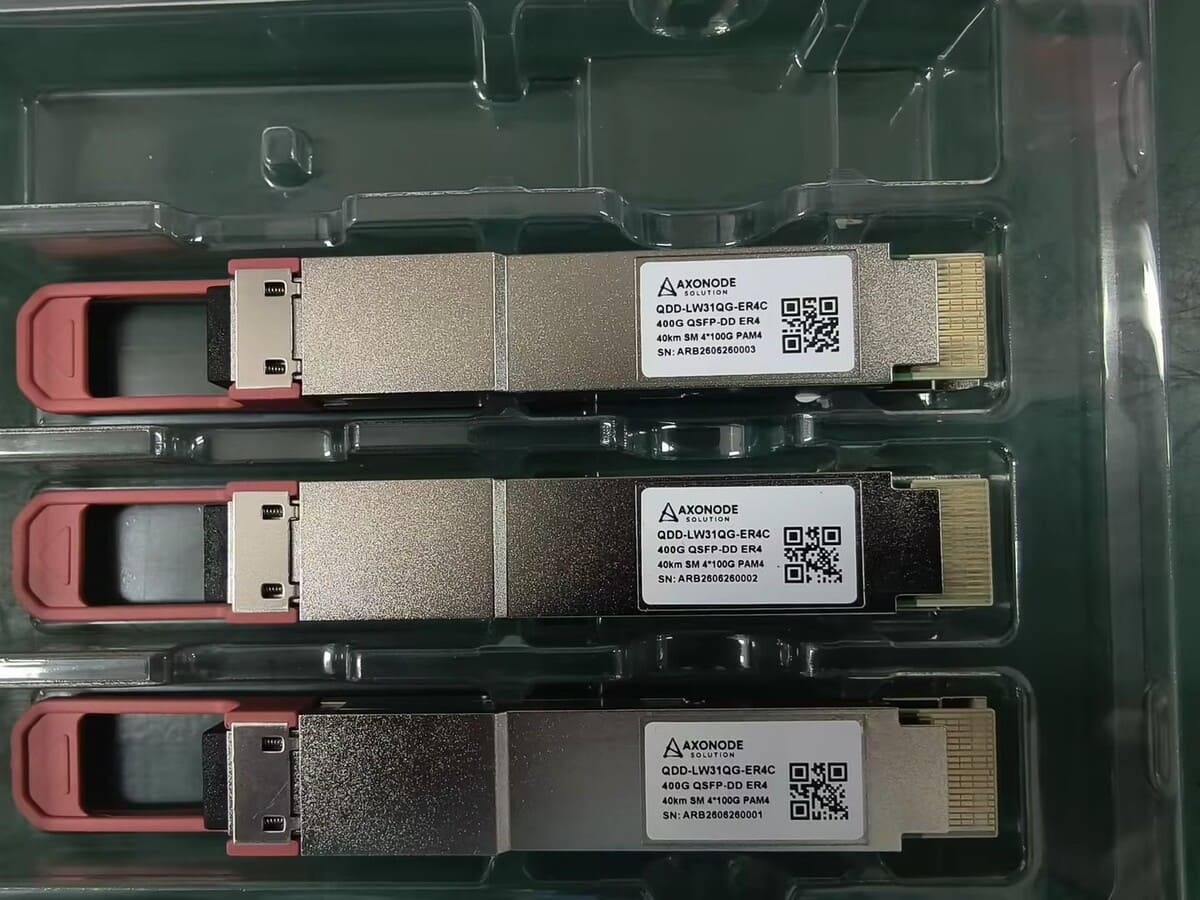
The selected 100G and 400G ER4 compatible modules can be coded for multiple switch platforms. This helps the same optics remain useful even if the network team changes or adds hardware platforms later.
A two-phase rollout
| Phase | Goal | What to Validate |
|---|---|---|
| Phase 1: 100G ER4 pilot | Deploy a small number of 100G ER4 modules between selected POPs. | Performance, stability, interoperability, turn-up, monitoring, and troubleshooting. |
| Phase 2: 400G ER4 pilot | Introduce a few pairs of 400G ER4 on the planned core ring. | Long-reach performance, redundancy, real traffic behavior, and capacity planning. |
No-MOQ, small-batch sourcing
With no minimum order requirement, the cooperative could buy optics a few pairs at a time. This kept financial risk low while allowing the project to keep moving.
Detailed datasheets, small-batch pricing, and direct DHL shipping also helped the team evaluate the project more clearly before scaling.
Why They Chose Service Over the Cheapest Quote
The cheaper vendor-locked offer lost because the cooperative valued flexibility, phased validation, complete technical documentation, and responsive project support.
| Decision Factor | Why It Mattered |
|---|---|
| Multi-vendor flexibility | The optics can remain useful if switch platforms change in the future. |
| No-MOQ pilot | The team could validate the design without buying 20+ units upfront. |
| Complete spec sheets | Clear datasheets made engineering evaluation easier. |
| Practical testing roadmap | The supplier helped the customer move from uncertainty to a phased validation plan. |
“Many people in the industry are willing to pay a little more when they receive superior service and feel confident that they are choosing the right product for what they are trying to achieve.”
— Project Lead, Network EngineeringEarly Outcomes and What Comes Next
- 100G ER4 performance is being validated in production conditions with no large volume commitment.
- The planned 400G core ring is not tied to a single switch vendor.
- Budget planning is easier with small-batch pricing and predictable logistics.
- The same supplier relationship may support future access-network projects.
FAQ
Why use ER4 optics for a utility POP ring?
ER4 optics support long-reach single-mode links and are commonly considered when POP-to-POP distance exceeds short-reach options.
Can compatible optics be coded across switch vendors?
Compatible modules can often be coded for the target platform. For real deployment, the switch model, port speed, firmware, and OEM part number should be reviewed before shipping.
What is a sensible pilot quantity for a 400G upgrade?
A practical pilot usually starts with enough modules to build and validate a real link. For many projects, this means a few pairs before scaling to a larger route.
Planning a similar 100G or 400G upgrade?
Send your switch models, link distance, target speed, and current BOM. Axonode can help review optics, coding, and a phased testing path before you place a larger order.
Submit Your BOM →